
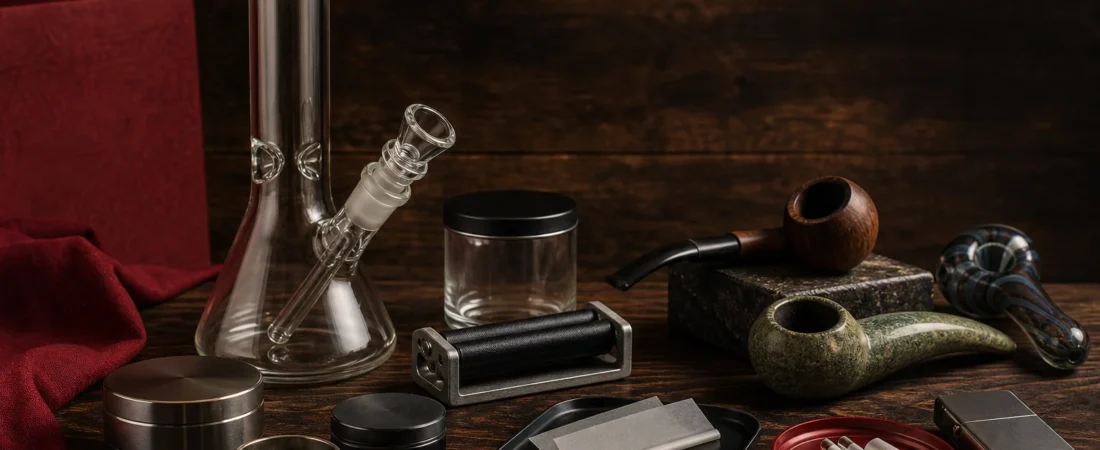
In the world of tobacconist accessories, bongs and pipes hold a prominent place. Although both are used to consume tobacco or legal herbal blends, their design, operation and user experience are quite different. In this guide we compare both formats so you can make an informed decision.
Please note: the sale of these accessories is strictly reserved for adults aged 18 and over.
What is a pipe and how does it work?
The pipe is one of the oldest and most widespread smoking accessories in the world. In its most basic form it consists of three parts: the bowl (where the tobacco or herb is placed), the shank or stem (the tube through which the smoke travels) and the mouthpiece (the end through which you inhale).
Its operation is straightforward: fill the bowl, apply heat and inhale through the mouthpiece. The smoke travels along the stem with no additional filtering element, making the process simple, quick and highly portable. Pipes are compact, easy to carry and require neither water nor any prior assembly.
What is a bong and how does it work?
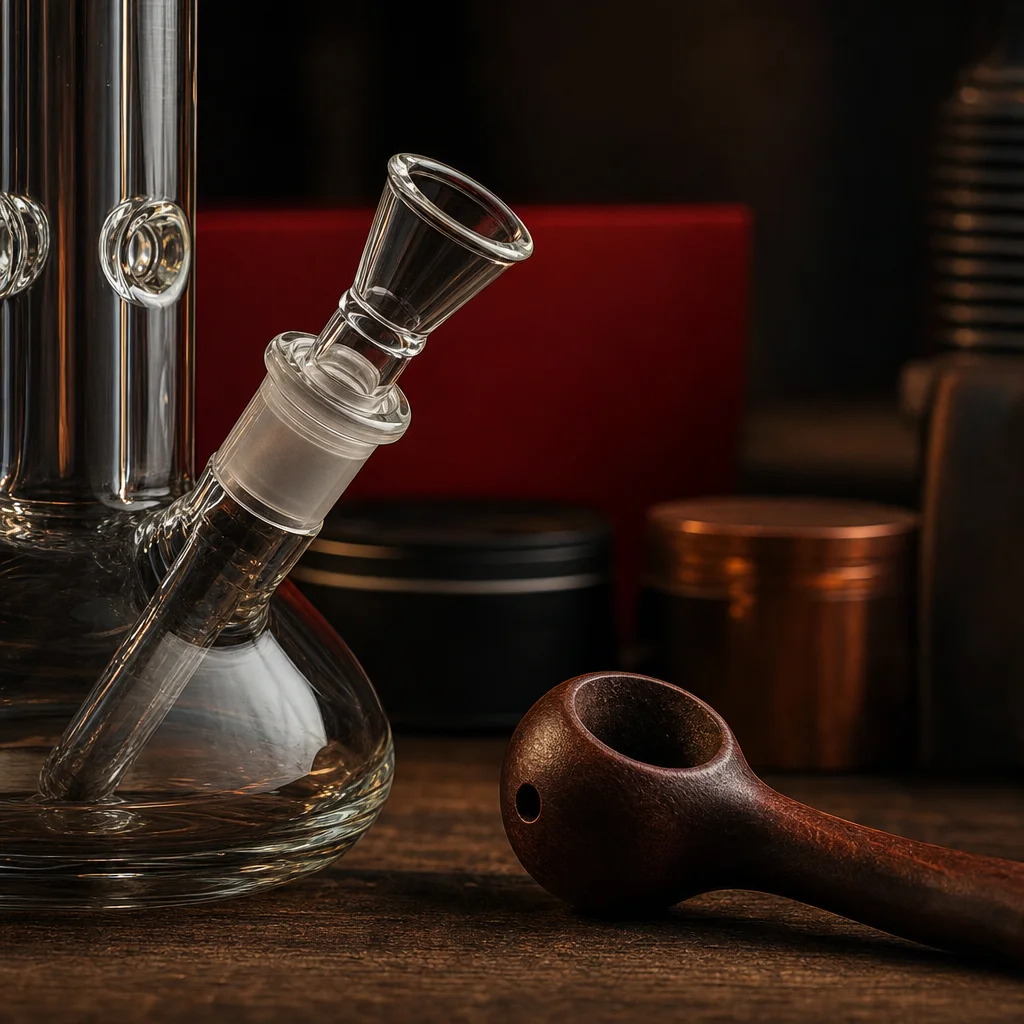
A bong is a larger accessory that incorporates a water chamber. The smoke produced in the bowl passes through the water before reaching the mouthpiece. This journey cools the smoke and filters out solid particles before it is inhaled.
Its typical structure includes: the main tube or body, the water chamber, the downstem and the removable bowl. Some models feature percolators or additional chambers that increase the filtering and cooling of the smoke. Bongs deliver smoother, more voluminous draws, though their size makes them less portable than a conventional pipe.
Bong vs pipe: comparison table
| Feature | Pipe | Bong |
|---|---|---|
| Size | Compact and portable | Larger, intended for home use |
| Filtration | No water filtration | Water filtration and cooling |
| Setup | None (ready to use) | Requires water and assembly |
| Maintenance | Cleaning the stem and bowl | Changing the water and cleaning the parts |
| Common materials | Wood, metal, glass, ceramic | Borosilicate glass, acrylic, metal |
| User experience | Direct and immediate | Cooler, smoother smoke |
Materials: which is most suitable for each accessory?
Glass
Glass, especially borosilicate, is the most highly regarded material for both bongs and high-end pipes. It is inert, does not affect the flavour of the tobacco or herb, is easy to clean and allows you to see inside the accessory. Its main drawback is fragility: it requires careful handling. Glass bongs are particularly prized by more discerning users precisely for the purity of flavour they offer.
Metal
Pipes and bongs made from metal (typically aluminium or stainless steel) stand out for their durability and resistance to knocks. They are a practical choice for anyone looking for a robust, long-lasting accessory. Metal can transfer more heat to the touch and, in some cases, may slightly affect the flavour if not cleaned regularly.
Wood
Wood is the quintessential traditional material for classic pipes. Woods such as briar, olive and cherry are popular for their warm aesthetic and their ability to absorb some of the moisture from the smoke. A well-seasoned wooden pipe improves with use, developing what enthusiasts call a “cake” in the bowl — a protective layer that builds up over time. Wooden pipes require more careful maintenance to prevent the wood from cracking or becoming excessively damp.
Acrylic and plastic
Acrylic bongs are the most affordable and break-resistant option. They are ideal for getting started with bongs without a significant outlay. Their main limitation is that they can retain odours more readily and are harder to clean thoroughly than glass.
Maintenance: key tips for prolonging the life of your accessory
Pipe maintenance
- Clean the stem regularly with a pipe cleaner or brush to prevent the build-up of residue.
- Empty the bowl after each use and remove any burnt tobacco remnants.
- With wooden pipes, avoid getting the exterior wet and allow it to dry thoroughly between uses.
- For a deep clean, disassemble the parts and use isopropyl alcohol on the metal or glass components.
Bong maintenance
- Change the water after every session: dirty water accumulates residue and affects the flavour.
- Remove the downstem and bowl to clean them separately on a regular basis.
- For deep cleans, use coarse salt and isopropyl alcohol inside the body of the bong, shake well and rinse thoroughly with plenty of water.
- Check the seals and bowl frequently for cracks or signs of wear.
How to choose between a bong and a pipe
The choice between the two depends primarily on three factors: the context of use, your personal preferences and the level of maintenance you are prepared to take on.
- If portability is a priority: a pipe is the most practical option. It fits in any pocket and needs neither water nor any preparation beforehand.
- If you prefer smoother, more voluminous draws: the bong, thanks to its water chamber, produces cooler, filtered smoke.
- If you value aesthetics and tradition: wooden or artisan glass pipes have a classic appeal that is hard to match.
- If you want a durable, hard-wearing accessory: metal or acrylic models are the most robust for everyday use.
- If you are new to this type of accessory: a simple metal or glass pipe is a straightforward entry point; an acrylic bong can be a good introduction to the format.
In our bongs and pipes section you will find a varied selection of both formats and materials so you can compare and choose the one that best suits what you are looking for.
Everything you just read, one click away
Frequently asked questions
What is the main difference between a bong and a pipe?
The fundamental difference is that a bong incorporates a water chamber through which the smoke passes before reaching the mouthpiece, cooling it and filtering out particles. A pipe, by contrast, carries the smoke directly from the bowl to the mouthpiece with no additional filtering element.
Which material is best for a pipe: wood, metal or glass?
It depends on how you use it. Wood offers a traditional experience and a warm aesthetic, but requires more care. Metal is very tough and long-lasting. Glass is inert, does not affect the flavour and is easy to clean, though it is more fragile. There is no universally superior material; each has its advantages depending on the user's preferences.
How often should a bong be cleaned?
It is advisable to change the water after every session. For a thorough clean of the walls and internal parts, regular cleaning is recommended, using coarse salt and isopropyl alcohol to dissolve accumulated residue.
Are bongs portable?
Generally speaking, bongs are accessories designed for home use due to their size and the fact that they require water to function properly. More compact models do exist, but they are still less portable than a conventional pipe.
What type of user is a classic wooden pipe best suited to?
A wooden pipe is particularly appreciated by those who seek a traditional smoking experience and value artisan craftsmanship. It is an accessory that improves with continued use and requires careful maintenance to preserve the material.