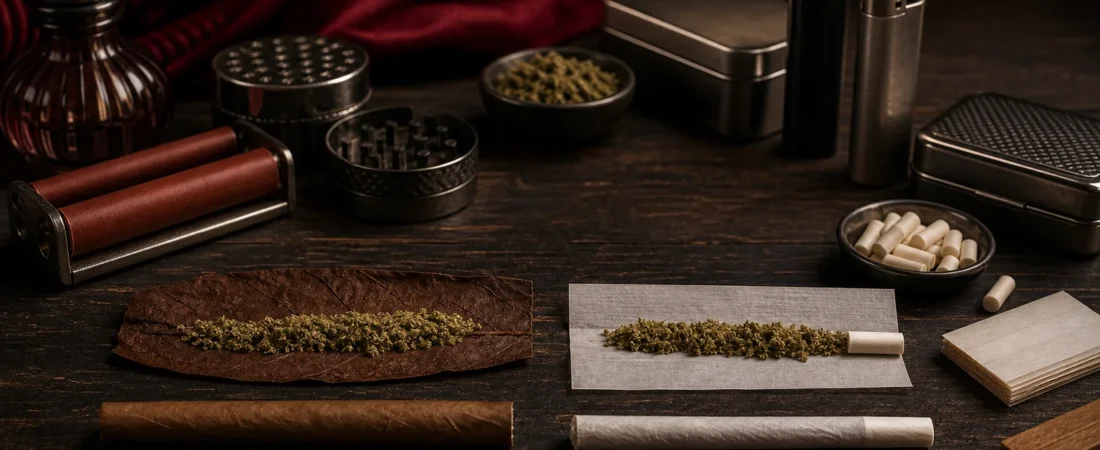
If you have spent any time in the world of roll-your-own tobacco, you have probably come across the term blunt on more than one occasion. Although its popularity has grown considerably in Spain over recent years, many smokers are still unsure what sets it apart from a conventional roll-up cigarette. In this article we look at its origins, the materials that define it, the formats available, and the key technical differences compared with standard rolling paper.
Please note: the sale of tobacco products and accessories is strictly reserved for adults aged 18 and over.
Origins of the term “blunt”
The term blunt comes from the cigar brand Phillies Blunt, which was widely popular in the United States during the 1980s and 1990s. The practice of emptying the outer leaf of one of these cigars and refilling it with loose tobacco or custom blends became widespread in North American urban culture, particularly within hip-hop and rap. Over time, the concept moved beyond the original cigar and came to refer to any roll-up cigarette that uses a tobacco-leaf wrap or a paper with similar characteristics — thicker and with more body than conventional rolling paper.
Today, the term is used generically to refer both to blunts made with natural tobacco leaves and to those that use special cellulose papers or alternative materials designed to replicate the classic blunt experience.
What type of paper or wrap is used in a blunt
This is the defining feature that sets a blunt apart from any other roll-up cigarette. There are three main categories of wrap:
1. Natural tobacco leaf
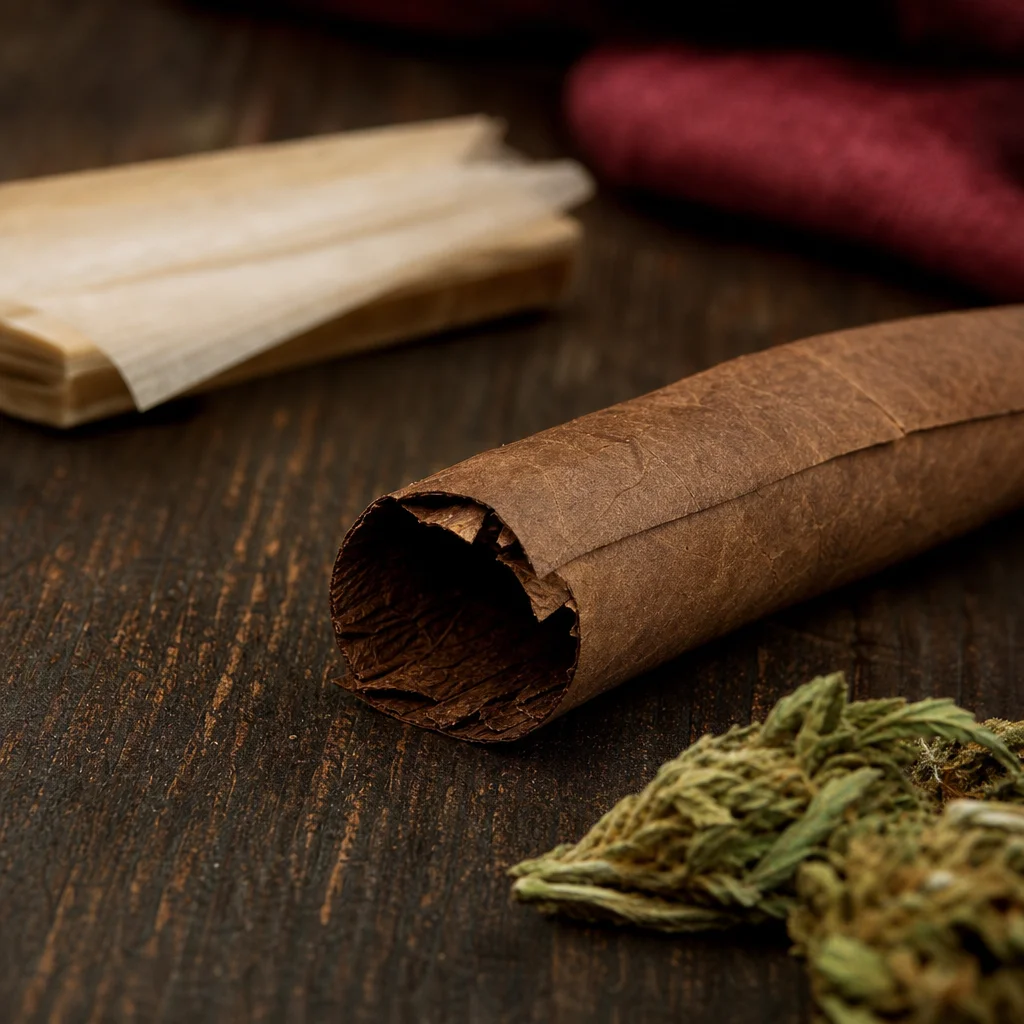
The most traditional wrap is the processed tobacco leaf, similar to the outer layer of a cigar. It delivers a distinctly pronounced tobacco flavour, a slower burn, and a thickness noticeably greater than that of standard rolling paper. Some brands sell these leaves in ready-to-use sheet format, with or without the central vein, and in a range of cured flavour profiles.
2. Cellulose or blended blunt paper
For those who prefer an experience closer to the classic blunt without using a tobacco leaf, there are blunt papers made from cellulose or blended plant fibres, with a higher grammage than fine rolling paper. Specialist brands such as Blunt Wrap offer wraps of this type in a wide variety of flavours and sizes, designed specifically for this format. Their more robust texture makes rolling easier and allows for a slower, more even burn.
3. Pre-rolled blunt cones
The market has also evolved to offer pre-rolled cones in blunt format: wraps already formed into the characteristic cone shape, ready to fill without needing to roll from scratch. This is a particularly practical option for those seeking convenience and consistent results. A notable name in this category is Cyclones papers, which combine the cone format with flavoured cellulose wraps; the brand Cyclone is one of the most recognised references in this segment.
Technical differences between a blunt and conventional rolling paper
To understand what makes a blunt special, it helps to compare it point by point with standard rolling paper:
| Feature | Conventional rolling paper | Blunt wrap |
|---|---|---|
| Material | Fine cellulose, hemp or rice | Tobacco leaf, thick cellulose or plant-fibre blend |
| Grammage / thickness | Very thin (low grammage) | Noticeably thicker and more robust |
| Burn | Fast or moderate | Slower and more even |
| Flavour contribution | Neutral or very mild | Pronounced (tobacco or flavoured) |
| Typical size | Varied (short, long, king size…) | Generally more substantial |
| Ease of rolling | Requires practice | More manageable due to thickness; pre-rolled cones available |
Flavoured paper: is it the same as a blunt?
It is common to confuse flavoured papers with blunt wraps, but they are not exactly the same thing. Flavoured paper is, in most cases, a thin rolling paper to which flavouring has been added, without the grammage or texture of a blunt wrap. Brands such as Juicy Jay are a benchmark in flavoured papers of standard grammage, offering a wide range of flavour profiles, but their burn behaviour and body are closer to conventional rolling paper than to the classic blunt.
That said, the boundary between the two concepts has become increasingly blurred: products now exist that combine the grammage and robustness of a blunt wrap with intense flavouring, so the distinction is not always clear-cut.

Formats available on the market
The current market offers a wide variety of formats for those looking for the blunt experience:
- Loose tobacco leaf sheets: the most classic format, for those who prefer to roll from scratch using natural material.
- Packaged cellulose wraps: similar to rolling leaves but with more body, available in multiple flavours.
- Pre-rolled blunt cones: ready to fill, in various sizes and materials.
- Individual or multipack blunt wraps: single-use wraps, easy to carry and use.
Each format suits a different type of user: from the more experienced smoker who values the manual rolling process, to those who prioritise convenience and consistent results.
Conclusion
A blunt is not simply a larger roll-up cigarette. Its defining characteristic lies in the type of wrap: thicker, with more body, a slower burn, and a flavour profile of its own — whether from natural tobacco or added flavouring. Understanding these differences makes it easier to choose the format that best suits individual preferences, both in terms of material and method of preparation.
Everything you just read, one click away
Frequently asked questions
What exactly is a blunt?
A blunt is a roll-up cigarette that uses a processed tobacco leaf or a higher-grammage paper as its wrap, rather than conventional rolling paper. It is characterised by a slower burn and a more pronounced flavour than standard thin rolling paper.
What is the difference between a blunt and a regular roll-up cigarette?
The main difference lies in the wrap: conventional rolling paper is thin and low in grammage, whereas a blunt wrap is noticeably thicker, more robust, and has greater body — all of which affects the burn and the flavour.
Is flavoured paper the same as blunt paper?
Not necessarily. Flavoured paper is typically a thin rolling paper with added flavouring, whereas blunt paper has a higher grammage and a more substantial texture. Although some brands combine both characteristics, they remain distinct categories.
Are there pre-rolled blunts ready to use?
Yes. Pre-rolled cones in blunt format are available on the market, ready to fill without needing to roll from scratch. Brands such as Cyclone offer this type of product in a range of flavours and sizes.
Where does the term "blunt" come from?
The term comes from the American cigar brand Phillies Blunt. The practice of emptying and refilling cigars from that brand became popular in North American urban culture during the 1980s and 1990s, and over time the term came to refer to any roll-up cigarette with a tobacco-leaf wrap or paper of similar characteristics.