When choosing a lighter, most smokers eventually face the same question: is it worth switching to a torch lighter, or does the trusty conventional lighter still do the job? The answer depends on how you use it, the environment you smoke in, and your personal preferences. In this article we compare both technologies objectively so you can make an informed decision.
Please note: the sale of tobacco products and accessories is strictly reserved for adults aged 18 and over.
How a conventional lighter works (soft flame)
The soft-flame lighter — also known as an open-flame or yellow-flame lighter — is the classic design we all know. Its mechanism is straightforward: a spark system (flint wheel or piezoelectric ignition) lights the butane gas or fuel-soaked wick, producing a visible yellow-orange flame that sits open at the top of the lighter.
Its main characteristics include:
- Visible and adjustable flame: on many models it is possible to adjust the flame height.
- Moderate temperature: open combustion produces a flame at a lower temperature than a jet flame.
- Compact and lightweight design: these are the most common lighters owing to their simple construction.
- Vulnerability to wind: the open flame is easily extinguished by draughts, which can be inconvenient outdoors.
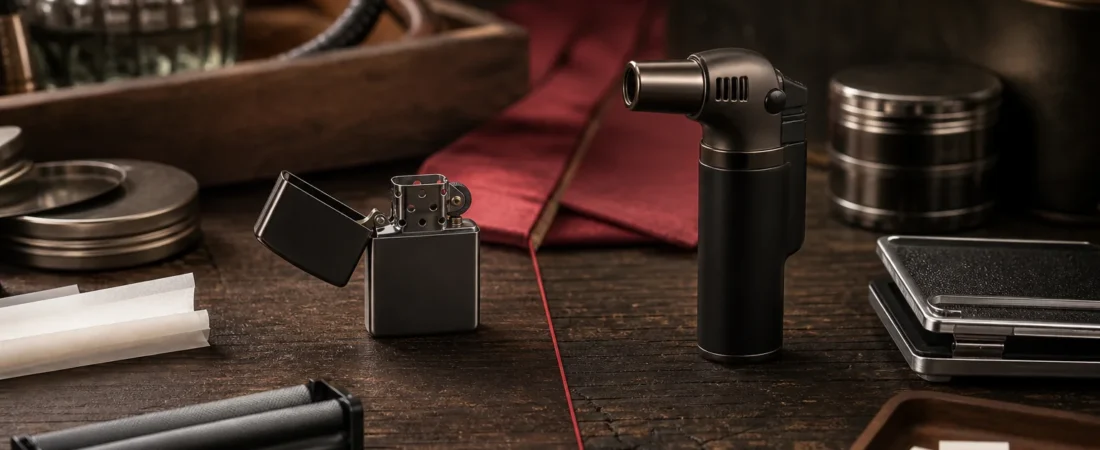
Brands such as Bic lighters and Zippo lighters are two of the most well-known names in the conventional-flame category, albeit with very different philosophies: Bic focuses on disposability and basic reliability, whilst Zippo uses a wick and lighter fluid in an iconic metal body.
How a torch lighter works (jet flame or blue flame)
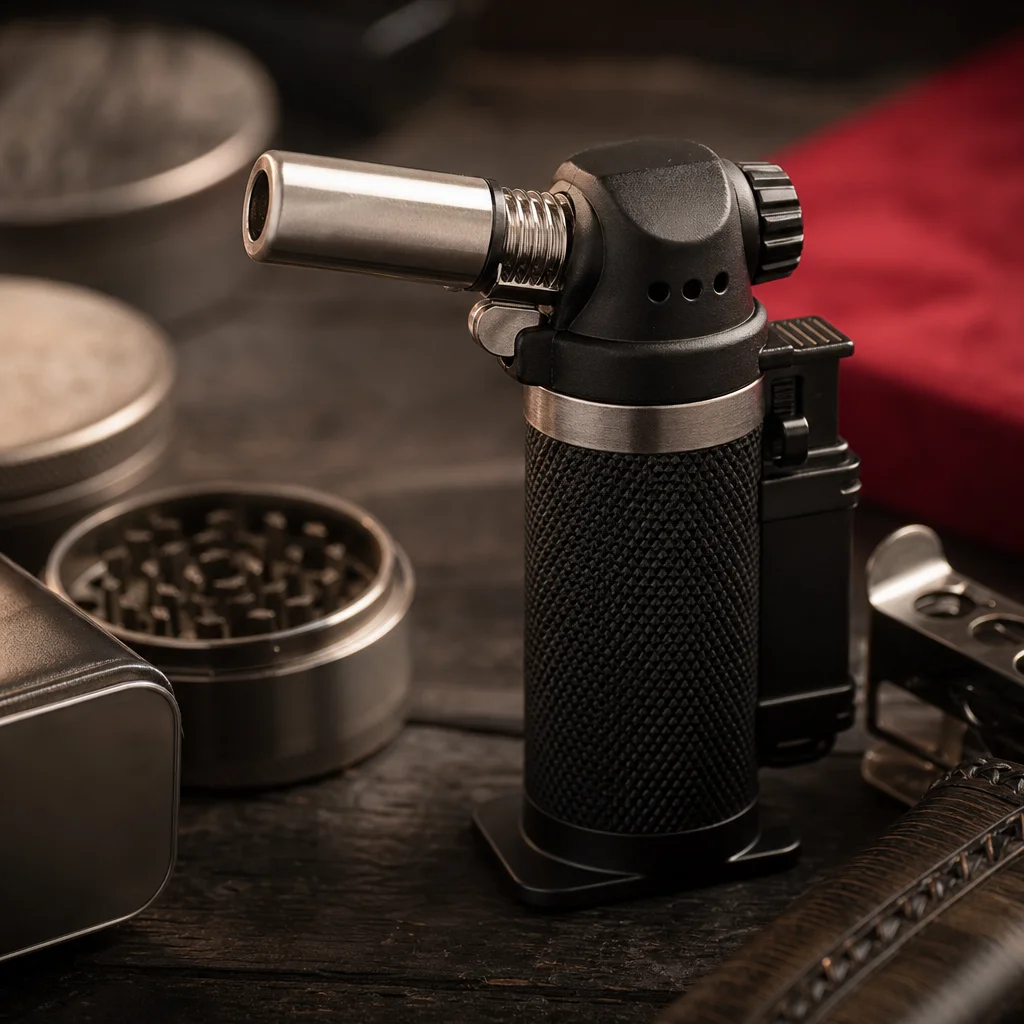
The torch lighter, also known as a jet flame or blue-flame lighter, works by burning pressurised butane gas. Unlike a conventional lighter, the gas is expelled through a narrow nozzle at high velocity, producing a concentrated, intense blue flame at a noticeably higher combustion temperature.
Its most notable characteristics are:
- Pressurised, high-temperature flame: the complete combustion of butane produces a hotter, more concentrated blue flame.
- Wind resistance: because the gas is expelled under pressure, the flame is not easily extinguished by the wind, making it highly practical outdoors.
- Precision: the fine jet allows the flame to be directed with accuracy, something particularly valued by cigar and pipe enthusiasts.
- Higher gas consumption: the output pressure means fuel is used at a higher rate than with conventional models.
- Generally more robust design: they typically feature sturdier bodies and piezoelectric ignition systems.
Head-to-head comparison: torch lighter vs regular lighter
| Feature | Conventional lighter | Torch lighter (jet flame) |
|---|---|---|
| Flame type | Open, yellow-orange | Concentrated, blue |
| Temperature | Moderate | High |
| Wind resistance | Low | High |
| Flame precision | Medium | High |
| Gas consumption | Low | Higher |
| Typical price | Budget-friendly | Mid to high |
| Typical use | Indoors, everyday use | Outdoors, cigars, pipes, cooking |
When should you use each type?
The conventional lighter: ideal for everyday use
If you smoke mainly indoors or in sheltered environments, a soft-flame lighter covers everyday needs perfectly well. It is the most widely used format, the easiest to find, and — in its refillable version — a long-lasting option. Its gentle flame is also less aggressive when lighting thin cigarettes or rolling papers, reducing the risk of uneven burning.
The torch lighter: for outdoors and demanding situations
The torch lighter truly comes into its own — quite literally — when wind is a factor. A terrace, the beach, a festival, or any open-air setting makes the jet flame the most reliable companion. Its precise, high-temperature flame also makes it particularly popular among cigar enthusiasts, where an even, controlled light makes a real difference to the experience.
Notable brands and models
Clipper: a benchmark in both formats
Clipper is one of the most comprehensive lighter brands on the Spanish market. It offers both conventional-flame models and jet flame versions. Their Clipper jet flame lighters combine the brand’s characteristic reliability with pressurised blue-flame technology, and are highly regarded for their balance of performance and durability. For those looking for something more premium, the refillable metal Clipper is a solid and elegant option within the conventional-flame range. You can browse the full range in the Clipper brand section.
Bic: the classic disposable soft-flame lighter
Bic lighters are the benchmark for conventional lighters: reliable, affordable, and widely available. Their soft-flame design makes them the most common choice for everyday indoor use.
Zippo: tradition and character in a wick flame
Zippo lighters occupy a category of their own. Their wick flame fuelled by lighter fluid and their distinctive click when opened have made them collector’s items. They are refillable, durable, and instantly recognisable, though their open flame makes them more susceptible to wind than a jet flame lighter.
Conclusion: choose based on your context
There is no universally superior type of lighter: each technology meets different needs. The conventional lighter is the most versatile and affordable option for everyday indoor use. The torch lighter excels outdoors, in windy conditions, or whenever precision lighting is required. Understanding the differences between the two allows you to make an informed choice and find the lighter that best suits your routine.
Everything you just read, one click away
Frequently asked questions
What is the difference between a torch lighter and a regular lighter?
A torch lighter (or jet flame) expels butane gas under pressure, producing a concentrated blue flame at a high temperature that is highly resistant to wind. A conventional lighter produces an open yellow-orange flame at a more moderate temperature, ideal for indoor use but vulnerable to draughts.
Is a torch lighter better for smoking cigars?
Many cigar enthusiasts prefer a torch lighter because its concentrated, precise flame allows for a more even and controlled light. That said, the final choice comes down to each smoker's personal preference.
Which lighter handles wind best?
A torch lighter or jet flame lighter is considerably more wind-resistant than a conventional lighter, as the gas is expelled under pressure in a compact jet that is not easily blown out by draughts.
Do torch lighters use more gas than regular lighters?
Yes, jet flame lighters generally have a higher gas consumption per use due to the pressure at which the butane is expelled. This means that, with the same tank capacity, they may have a shorter run time than a soft-flame lighter.
Does Clipper make torch lighters?
Yes, Clipper offers jet flame models within its catalogue, alongside its extensive range of refillable conventional lighters. It is one of the brands with the widest variety of formats available on the Spanish market.