
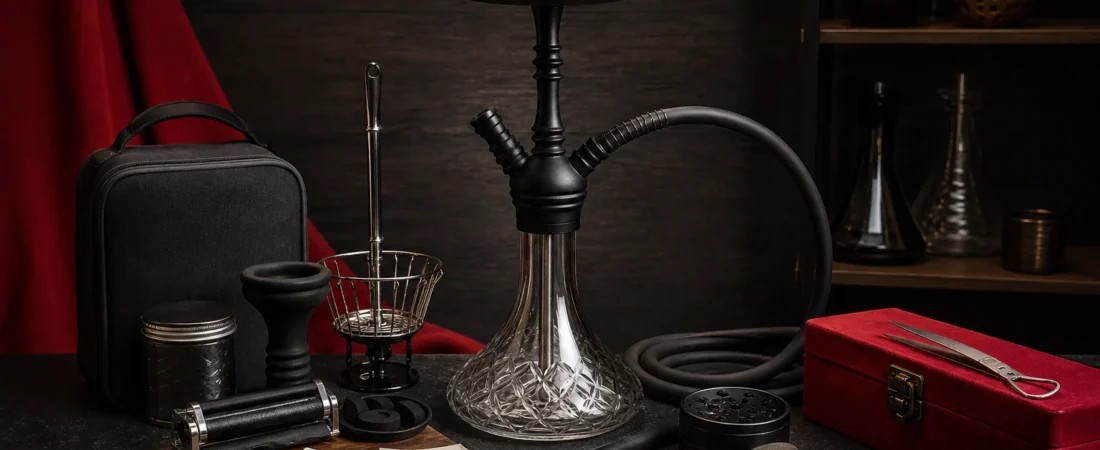
If you’ve just bought your first hookah or are thinking about it, it’s perfectly normal to have questions about its components, what accessories you need, and how to put it together properly. This guide is designed to give you a clear, structured overview of everything in the world of shisha — from its parts to the preparation process. Please note: the sale of hookahs and their accessories is strictly reserved for adults aged 18 and over.
What is a hookah or shisha?
The hookah, also known as a shisha, narghile or waterpipe, is a device of Eastern origin designed to heat shisha tobacco — or tobacco molasses — using charcoal, passing the smoke through water before it is drawn through the hose. Its modular structure is one of its most distinctive features: it is made up of several pieces that fit together and can be disassembled for cleaning or replacement.
There is a wide variety of models on the market, from traditional brass and glass designs to more modern versions in stainless steel or acrylic. If you’d like to explore the options available, you can browse the full hookah catalogue to find the model that best suits your preferences.
Main parts of a hookah
Getting to know each component is the first step towards understanding how the whole thing works and knowing which part to replace when the time comes.
1. The bowl
The bowl is the container placed at the top of the hookah, where the shisha tobacco or molasses is loaded. It is typically made from clay, ceramic, silicone or glass. Its shape and material directly affect how heat is distributed across the tobacco. Clay bowls are the most traditional, while silicone bowls stand out for their durability and ease of cleaning.
2. The stem
The stem is the central metal tube that connects the bowl to the water base. Smoke travels down through it from the bowl, where it is filtered through the water. Stems can be a single piece or made up of several threaded or interlocking sections, which makes them easier to transport and store.
3. The base (vase)
The base is the container — usually made of glass — that is filled with water. The lower end of the stem sits submerged in the water, so the smoke bubbles through it before reaching the hose. The water level matters: too much makes it harder to draw; too little reduces the filtration. As a general rule, the tube should be submerged by around two to four centimetres.
4. The hose
The hose connects the stem to the mouthpiece and is the channel through which the user draws smoke. Hoses come in silicone, leather, fabric or composite materials. Silicone hoses are particularly popular for their flavour neutrality and ease of cleaning, as they can be rinsed with water without the material deteriorating.
5. The hose adapter and purge valve
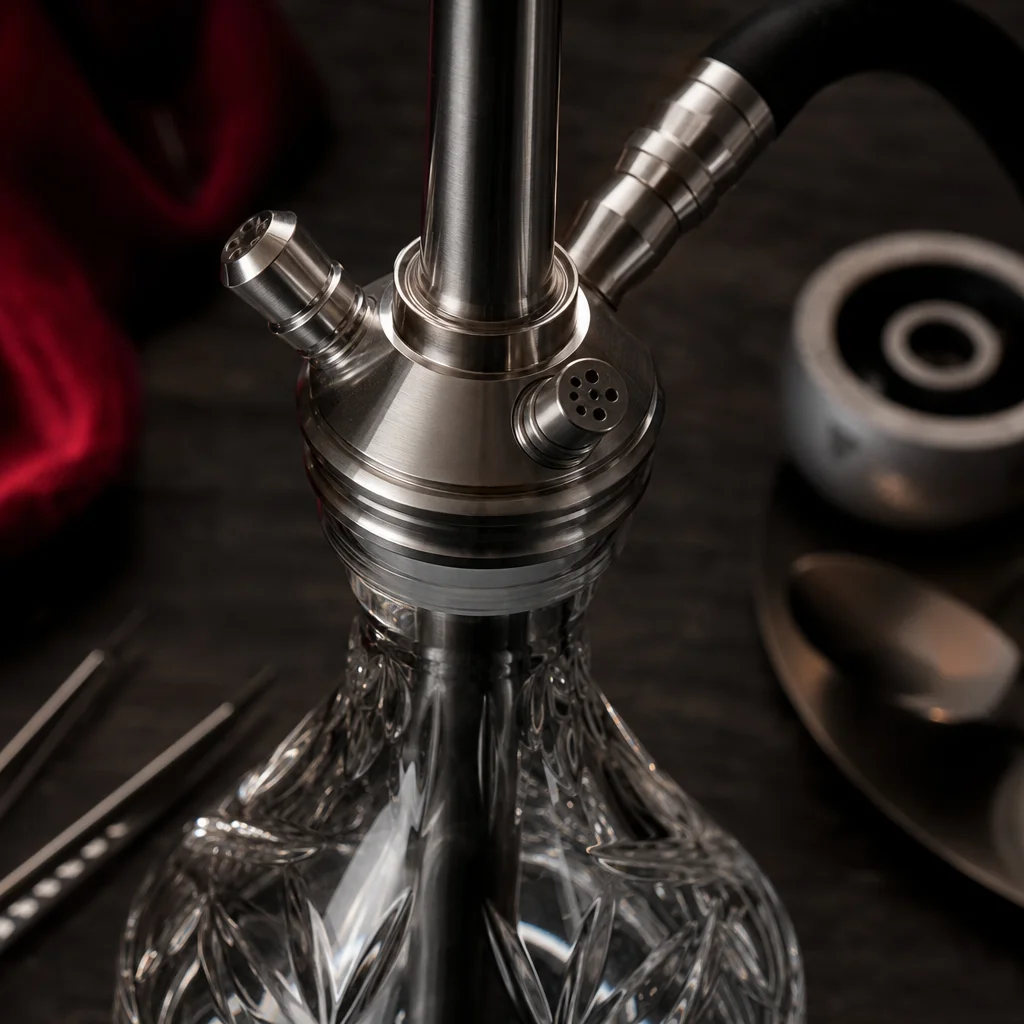
The adapter is the piece that joins the hose to the stem. Many hookahs also include a purge valve: a small opening with a ball bearing inside that allows accumulated smoke to be expelled from the base by blowing gently, without air flowing back in.
Essential accessories for getting started
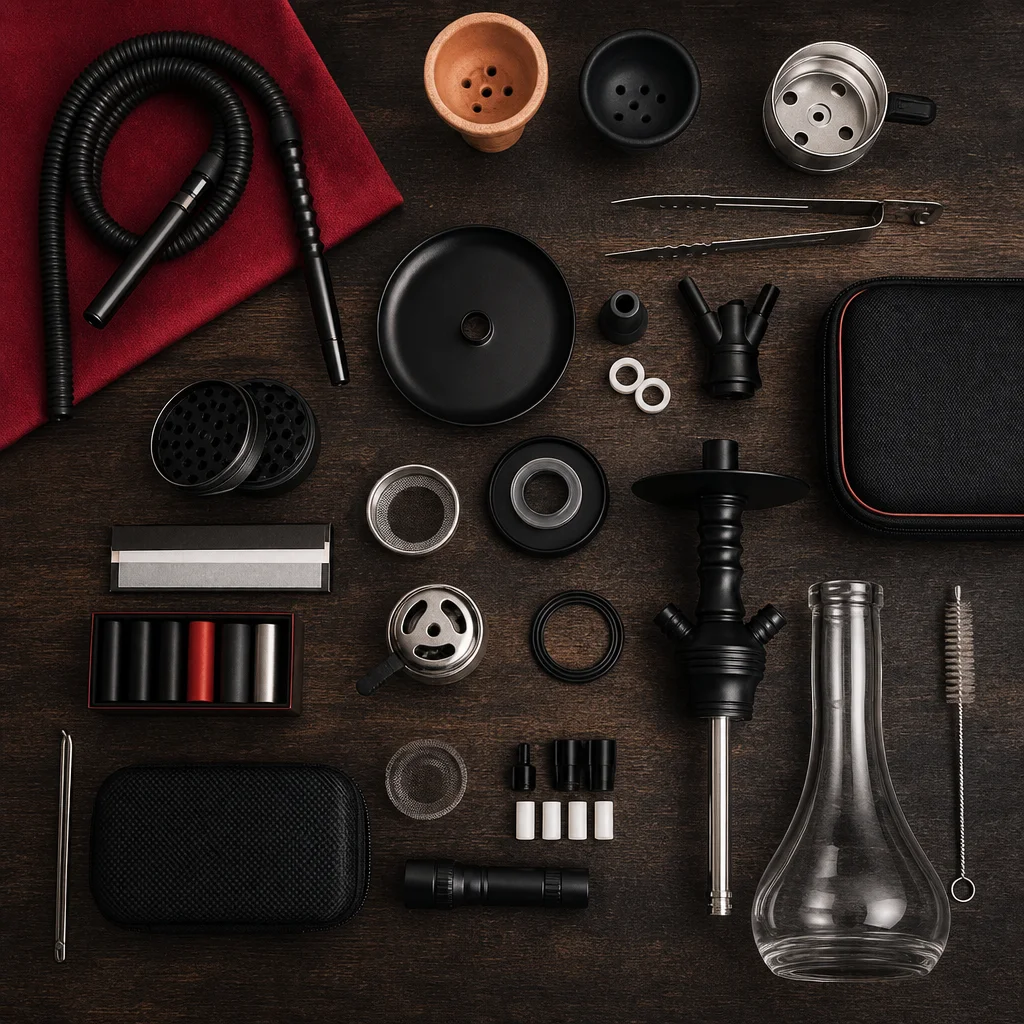
In addition to the hookah itself, there are a number of hookah accessories that are indispensable for a complete session.
Hookah charcoal
Charcoal is the heat source that warms the tobacco in the bowl. There are two main types:
- Quick-light charcoal: lights with a lighter or direct flame in a matter of seconds. It’s convenient for beginners, though it tends to produce slightly more ash.
- Natural charcoal (coconut or other plant-based sources): requires a burner or electric lighter to reach the right temperature, but delivers a more even and longer-lasting heat. It is the most widely used by regular shisha enthusiasts.
You can find both varieties in the hookah charcoal section of the shop.
Mouthpieces
Mouthpieces are the accessory that attaches to the end of the hose and comes into contact with the lips. There are disposable mouthpieces — made from plastic or card — and reusable ones in materials such as wood, resin or metal. They are commonly used when a hookah is shared between several people. Browse the selection of hookah mouthpieces to see the available formats.
Charcoal tongs
Tongs allow you to handle lit charcoal safely and precisely — whether placing it on the bowl, removing it, or repositioning it during a session. They are usually made from stainless steel and are long enough to keep your hand well away from the heat.
Heat management device (HMD)
A heat management device is an accessory placed over the bowl as an alternative to traditional aluminium foil. It allows you to regulate the amount of heat reaching the tobacco more precisely, simply by adjusting the ventilation slots.
Aluminium foil
If you don’t have an HMD, aluminium foil is the classic option: it is stretched tightly over the bowl and pierced with a needle or skewer to allow heat to pass through to the tobacco.
How to assemble a hookah step by step
The assembly process is straightforward once you know the parts. Follow this order:
- 1. Fill the base with water so that the lower end of the stem is submerged by around two to three centimetres.
- 2. Fit the stem onto the base, making sure the seal is airtight (many models include a rubber grommet for this purpose).
- 3. Connect the hose to the corresponding adapter on the stem.
- 4. Place the bowl on top of the stem, again with its sealing grommet in place.
- 5. Fill the bowl with shisha tobacco or molasses without packing it too tightly: air needs to be able to circulate between the strands.
- 6. Cover the bowl with tightly stretched, pierced aluminium foil, or with the heat management device.
- 7. Light the charcoal and, once it is fully glowing red (with no black spots remaining), place it on the foil or HMD using the tongs.
- 8. Wait a few minutes for the heat to distribute evenly before beginning to draw gently through the hose.
Maintenance and cleaning
Regular maintenance extends the life of all the components and preserves the flavour of the tobacco from one session to the next. After each use, empty and rinse the base with warm water, flush the hose (if the material allows), and clean any tobacco residue from the bowl. The stem can be cleaned with a long brush designed specifically for hookahs. Avoid leaving standing water in the base for extended periods.
Summary of components and accessories
| Component | Function | Common materials |
|---|---|---|
| Bowl | Holds the tobacco/molasses | Clay, ceramic, silicone |
| Stem | Carries smoke down to the base | Stainless steel, brass |
| Base | Filters smoke through water | Glass, acrylic |
| Hose | Carries smoke to the user | Silicone, leather, fabric |
| Charcoal | Heat source | Coconut, wood, quick-light |
| Mouthpiece | Lip contact point | Plastic, wood, resin |
| Tongs | Handling the charcoal | Stainless steel |
With this guide, you have everything you need to understand how a hookah works and to prepare your first session with confidence. Bear in mind that the quality of each component has a bearing on the end result, so it’s well worth taking the time to choose both your hookah and its accessories carefully.
Everything you just read, one click away
Frequently asked questions
What parts does a hookah or shisha have?
A hookah is made up of five main parts: the bowl (where the tobacco is loaded), the stem (the central metal tube), the base (the water-filled container), the hose (through which you draw smoke), and the adapters or sealing grommets that join each section together.
What accessories do I need to use a hookah for the first time?
The basic accessories are: charcoal (quick-light or natural), tongs to handle it, aluminium foil or a heat management device, and mouthpieces if the hose is going to be shared. Shisha tobacco or molasses is, of course, essential.
How much water should I put in the hookah base?
The right amount of water is whatever leaves the lower end of the stem submerged by two to four centimetres. Too little water reduces filtration; too much significantly increases the resistance when drawing.
What is the difference between quick-light and natural hookah charcoal?
Quick-light charcoal ignites with a direct flame in seconds and is very convenient for occasional use. Natural charcoal, typically made from coconut, requires a burner or electric lighter but provides a more even, longer-lasting heat with less residue.
How often should I clean my hookah?
It is advisable to clean the base and rinse the hose after every session. The bowl should be cleared of tobacco residue after each use. Regular maintenance prevents the build-up of residue that could affect the flavour in subsequent sessions.