
In any tobacconist, whether on the high street or online, the rolling papers section takes up more space than it might first appear. You’ll find booklets at very keen prices sitting alongside brands with decades of history. It’s a question many smokers quite reasonably ask: what is the actual difference between a budget paper and a branded one? Is it just the name, or is there something tangible behind the price?
This article examines the technical factors that set rolling papers apart, plainly and without claims we can’t back up. The aim is to give you objective criteria so you can decide for yourself when it’s worth spending more — and when a basic paper does the job perfectly well.
Please note: the sale of tobacco products and accessories is reserved for adults aged 18 and over.
The technical factors that really matter
When comparing rolling papers, there are five technical variables that make the difference between a smooth experience and a frustrating one. It’s worth understanding them before making a decision.
1. Paper weight
The weight — expressed in grams per square metre (g/m²) — determines the thickness and strength of the paper. A lower-weight paper tends to be thinner and more translucent, which some smokers prefer. Premium papers work with very precise, tightly controlled weights across each production batch, resulting in a consistent texture from booklet to booklet. With more budget-friendly papers, this consistency can vary slightly between batches.
2. Porosity
Porosity directly affects how air flows through the paper during combustion. A paper with well-calibrated porosity allows for a more regular and predictable burn. Branded manufacturers invest in production processes that control this parameter with precision. In lower-cost papers, porosity can be less uniform, which sometimes results in an uneven burn or the cigarette “running” on one side.
3. The adhesive gum
The gum strip is one of the most distinguishing elements. In branded papers, the gum is typically of plant-based origin (gum arabic or similar), applied evenly and in just the right amount to seal the cigarette properly without excess. In budget papers, the quality and application of the gum can be less precise: sometimes it grips too quickly, other times not enough, and in extreme cases it can come unstuck in humid conditions.
4. Even burn
A consistent burn from start to finish is the result of the combination of the factors above: stable weight, uniform porosity, and well-applied gum. Branded papers tend to offer greater consistency in this regard. Basic papers can perform perfectly well under normal conditions, but show more variability when conditions change (humidity, wind, very dry or very moist tobacco).
5. Materials and cellulose origin
Most rolling papers are made from flax, hemp, or a blend of both. Leading brands typically specify the origin and type of fibre, ensuring greater traceability of the product. With unbranded or very low-cost papers, this information is less transparent. This does not necessarily mean a worse practical result, but it does mean less oversight of the process.
Budget papers: when they’re good enough
A budget paper does its job without issue under standard conditions: well-hydrated tobacco, a dry and sheltered environment, and a roller with some experience. If you roll at home, at your leisure and without adverse conditions, the difference compared to a branded paper can be barely noticeable day to day.
The most representative example in this category is Pay-Pay Normal rolling paper, a classic staple in Spain that has been on the market for decades precisely because it delivers acceptable performance at a very competitive price. It’s the paper for the practical smoker who isn’t after anything fancy.
If you’d like to explore more options within this range, you can browse the full rolling papers category in the shop, where you’ll find everything from the most basic formats to the more specialised ones.
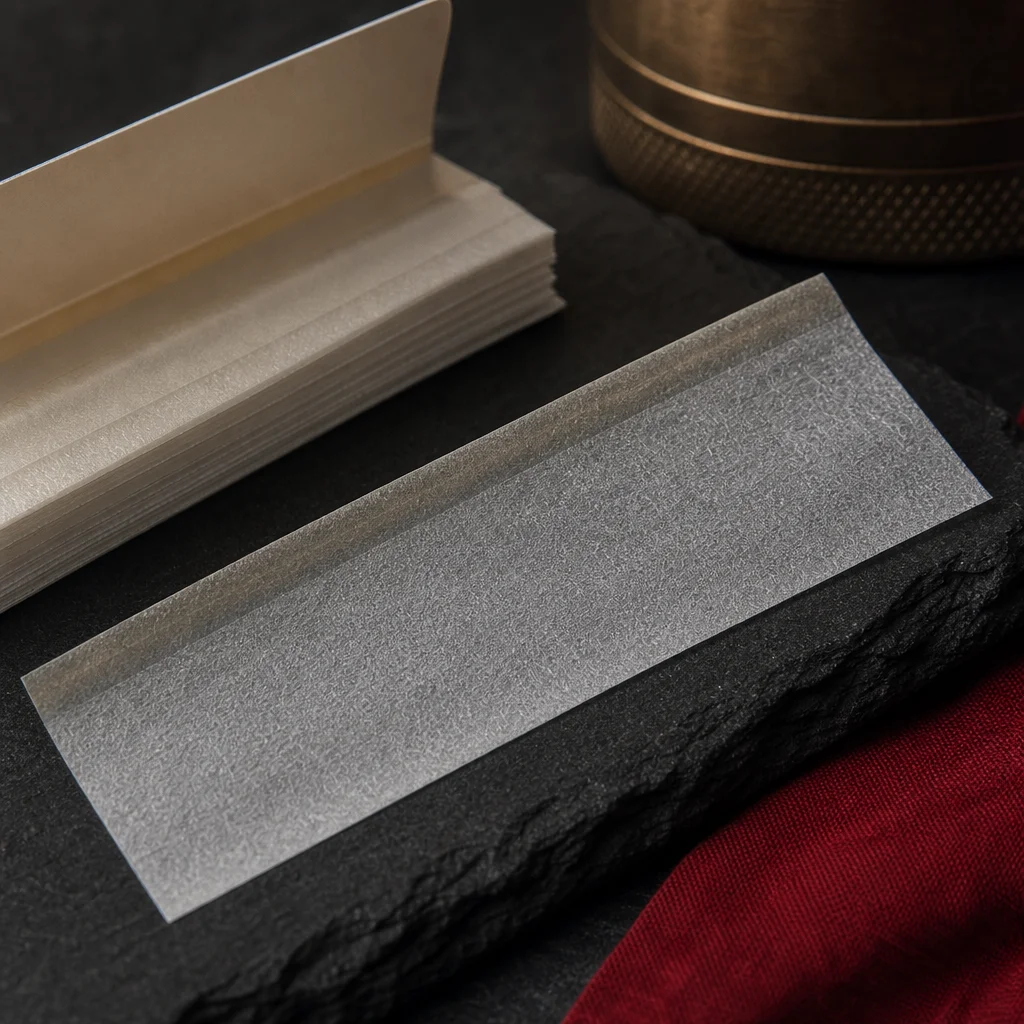
Branded papers: what they actually offer
Established brands have built their reputation on consistency. It’s not that a branded paper is radically different in concept, but rather that the quality controls during manufacturing are more rigorous and the result is more predictable.
- OCB: one of the most recognised brands worldwide. Their papers stand out for the fineness of the paper and the quality of the gum. They offer different lines to suit varying preferences for thickness and material.
- RAW: committed to unbleached papers, with a very distinctive aesthetic and manufacturing philosophy. Their texture is characteristic and their burn is highly regarded by discerning smokers.
- Smoking: a Spanish brand with a long tradition, combining solid value for money with a wide range of formats. A very reliable mid-range option.
- Abadie: a historic French reference, appreciated for its fine paper and quality gum. Less well known among younger smokers, but with a loyal following.
Quick comparison: budget vs brand
| Factor | Budget paper | Branded paper |
|---|---|---|
| Weight consistency | Variable between batches | High and controlled |
| Porosity | Less uniform | Precisely calibrated |
| Gum quality | Functional, less uniform | Plant-based gum, precise application |
| Even burn | Adequate under normal conditions | Consistent across more conditions |
| Material traceability | Little information available | Fibre origin and type specified |
| Format variety | Limited | Wide (size, thickness, material) |

When is it worth spending more?
The answer depends on your profile as a smoker and the conditions in which you typically roll. If you roll outdoors in the wind, in humid environments, or with tobacco of varying textures, a branded paper with greater technical consistency will make a noticeable difference. If you’re an experienced roller looking for a very specific result in terms of paper feel or burn rate, specialist brands have ranges designed precisely for that.
If, on the other hand, you roll in controlled conditions and a basic paper has always served you well, there’s no compelling technical reason to switch. A budget paper isn’t a defective paper — it’s simply a paper with fewer quality controls, which in practice only becomes apparent in demanding situations.
Conclusion
The difference between a budget rolling paper and a branded one is not a marketing myth, but nor is it as vast as some purists would have you believe. It lies in the details: batch-to-batch consistency, gum quality, porosity uniformity, and burn performance in adverse conditions. For the occasional smoker or someone who rolls at home without complications, a budget paper is perfectly adequate. For the more discerning smoker or one who rolls in variable conditions, investing in a reputable brand makes technical sense.
The smartest approach is to try both and draw your own conclusions. You can browse the full range available in the rolling papers section and compare formats, brands, and lines without having to commit to a single option.
Everything you just read, one click away
Frequently asked questions
What is the difference between budget rolling papers and branded ones?
The main differences lie in weight consistency, porosity uniformity, gum quality, and burn regularity. Branded papers apply more rigorous manufacturing controls, resulting in a more predictable outcome — particularly in adverse conditions such as humidity or wind.
Are budget rolling papers lower quality?
Not necessarily. A budget paper does its job under normal conditions. The difference compared to a branded one becomes most apparent in demanding situations: humid environments, very dry or very moist tobacco, or when a particularly even burn is required. For everyday use under standard conditions, a basic paper can be perfectly adequate.
Which rolling paper brands are most highly regarded?
Among the most recognised in Spain are OCB, RAW, Smoking, and Abadie. Each has its own characteristics: OCB stands out for its fineness, RAW for its unbleached paper, Smoking for its wide range and Spanish heritage, and Abadie for its fine paper of French origin.
What is gum arabic in rolling papers?
It is a plant-based gum used on the adhesive strip of quality rolling papers. It is valued because it bonds well with a slight amount of moisture, is of natural origin, and is applied evenly on branded papers, ensuring a consistent seal.
Does paper weight affect the burn?
Yes. A lower weight generally means a thinner paper that may burn more quickly. What matters is not just the weight itself, but its consistency between batches: a paper with a stable, controlled weight delivers a more predictable burn than one that varies from booklet to booklet.