
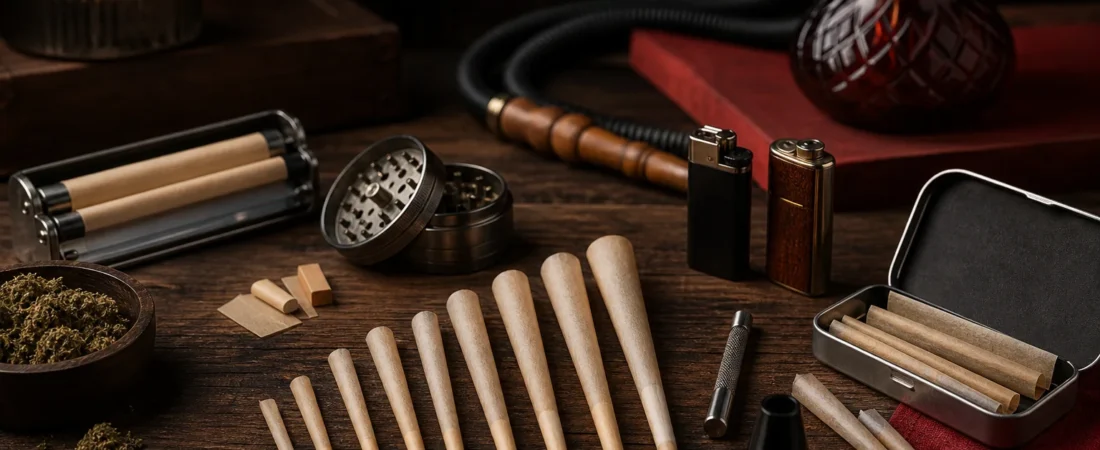
Pre-rolled cones have become one of the most popular formats among those who prefer to prepare their own rolling tobacco. The concept is straightforward: the paper comes already rolled with the filter built in, so all you need to do is fill it. In this guide we focus on cones from RAW, the undisputed benchmark in the sector, and explain what sizes are available, what the paper is made from, how to fill them step by step, and how they differ from other rolling methods.
Please note: tobacco products are sold exclusively to adults aged 18 and over.
What exactly is a pre-rolled cone?
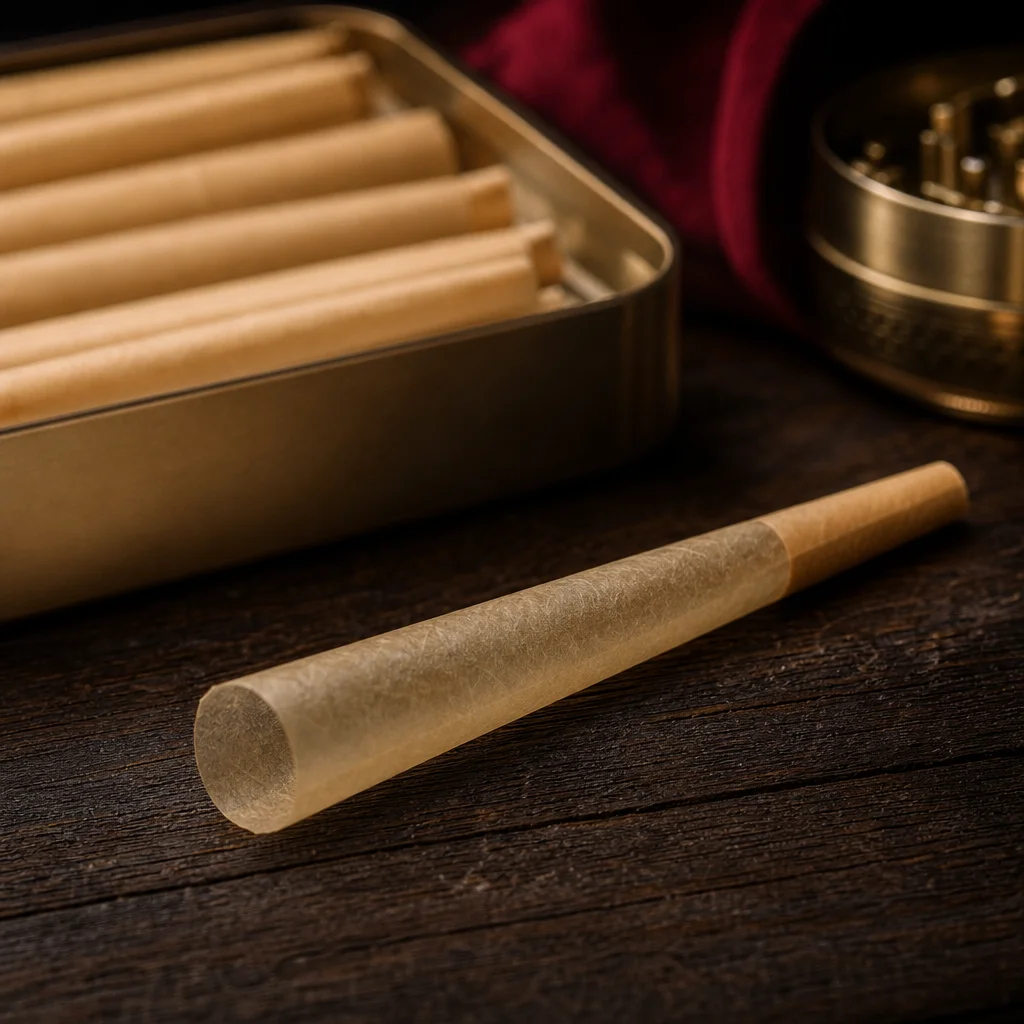
A pre-rolled cone is a rolling paper that has already been shaped into a cone — wider at the filling end and narrower at the filter end — with the gummed edge factory-sealed. Unlike a flat paper, a cone arrives ready to be filled, with no need to master the manual rolling technique. The cardboard filter (also known as a tip or roach) is integrated into the narrow end, so there is no need to add one separately.
This format is particularly handy for those new to rolling tobacco, but it is also used by experienced smokers who want consistency and speed in their preparation.
RAW paper: material characteristics
RAW is known for using an unbleached RAW paper with a slightly textured surface and a characteristic natural brown-cream tone. This paper does not go through chlorine bleaching processes, which gives it its distinctive appearance compared to conventional white papers. The burn line — that small zigzag stripe visible on the paper — is a RAW design feature that helps control combustion and prevents the paper from burning faster than the tobacco.
RAW cones are made from this same paper, ensuring consistency between the cone format and the loose-leaf paper from the same brand.
Available RAW cone sizes
RAW offers its cones in several sizes to suit different preferences for quantity and length. The three most common formats are:
| Format | Approximate length | Fill capacity | Usage profile |
|---|---|---|---|
| 1¼ (Single Wide) | ~84 mm | Smaller | Individual use, shorter session |
| 98 Special | ~98 mm | Medium | Intermediate format, very popular |
| King Size | ~109 mm | Larger | Longer or shared use |
There are also special formats such as the RAW Lean and the RAW Emperador for those looking for large-capacity cones, although the three formats above account for the vast majority of everyday demand.
How to fill a RAW cone step by step
Filling a cone correctly makes the difference between an even preparation and one that goes out or burns unevenly. The process is straightforward if you follow these steps:
1. Prepare the tobacco
Break the tobacco down thoroughly to remove any clumps or stalks. The more uniform the texture, the more even the fill and the subsequent burn will be. A grinder makes this task much easier.
2. Load the tobacco into the cone
Hold the cone by the tip with the open end facing upwards. Add small amounts of tobacco using your fingers or the packing stick that is usually included in the pack of cones. The packing stick — a small cardboard or wooden rod — lets you push the tobacco down into the cone without distorting the paper.
3. Pack progressively
After each small amount of tobacco, tamp it down gently with the packing stick by tapping lightly on a flat surface. The aim is to avoid air pockets without over-packing, which would restrict the draw.
4. Close the end
Once filled to approximately one centimetre from the edge, twist the remaining paper to close the cone. There is no need to use saliva or additional adhesive — the paper simply needs to be twisted.
A note on filters
RAW cones include their own integrated cardboard filter, but if you prefer to customise the tip you can explore the RAW filters available in various formats to suit your preferences.

Pre-rolled cones vs. rolling by hand vs. rolling machines
There are three main methods for preparing a roll-up, each with its own objective characteristics:
Rolling by hand
This requires practice and manual dexterity. It allows complete freedom over the shape, the amount of tobacco, and the type of filter. The result can be highly personalised, but the learning curve is steep and early attempts tend to be uneven.
Rolling machines
Rolling machines automate the process of wrapping the paper around the tobacco. They produce a very uniform cylindrical result and are faster than hand rolling once you have got to grips with the mechanism. They require flat papers and, in some models, pre-made tubes.
Pre-rolled cones
Cones eliminate the hardest part: the rolling itself. You simply need to fill them, which makes them the most accessible method for beginners. The conical shape encourages the tobacco to distribute progressively. On the downside, the cost per unit is slightly higher than loose paper, and the shape is not exactly cylindrical as it is with a machine-rolled cigarette.
| Method | Difficulty | Consistency | Speed |
|---|---|---|---|
| Rolling by hand | High | Variable | Slow at first |
| Rolling machine | Medium | High (cylindrical) | Fast |
| Pre-rolled cone | Low | High (conical) | Very fast |
Are there other brands of pre-rolled cones?
Yes. Although RAW is the most recognised brand in this segment, other options are available on the market. Futurola, for example, is another brand specialising in pre-rolled cones with a wide range of sizes and paper materials, and is also highly regarded among regular users of this format.
Conclusion
RAW pre-rolled cones offer a practical and accessible solution for those who prefer to prepare their own tobacco without needing to master the hand-rolling technique. With three main sizes — 1¼, 98 Special, and King Size — unbleached paper, and an integrated filter, they cover the needs of most regular smokers. Filling them correctly, packing progressively and avoiding over-tamping, is the key to achieving an even result. If you would like to explore the full range available, you can browse the complete catalogue of pre-rolled cones at Tu Otro Estanco.
Everything you just read, one click away
Frequently asked questions
What sizes do RAW cones come in?
The most common RAW cone sizes are the 1¼ (the smallest, at around 84 mm), the 98 Special (an intermediate format at around 98 mm), and the King Size (the longest, at around 109 mm). Special large-capacity formats such as the Lean and the Emperador are also available.
How do you fill a RAW cone correctly?
Break the tobacco down thoroughly, then add it in small amounts using your fingers or the packing stick included in the pack, tamping it down gently by tapping on a flat surface. Repeat the process until the cone is full, then close it by twisting the remaining paper.
Do RAW cones come with a built-in filter?
Yes, RAW cones include a cardboard tip integrated into the narrow end, so there is no need to add a filter separately. That said, loose RAW filters are available for those who prefer to customise this element.
How does a pre-rolled cone differ from rolling by hand?
With a pre-rolled cone the paper is already rolled and sealed, so you only need to fill it. Rolling by hand requires you to wrap the paper around the tobacco manually, which takes practice and skill. Cones are more accessible for beginners and deliver greater consistency from the very first attempt.
Is RAW the only brand that makes pre-rolled cones?
No. Although RAW is the best-known brand in this segment, other specialist brands exist, such as Futurola, which also offers a wide range of pre-rolled cones in various sizes and paper materials.