
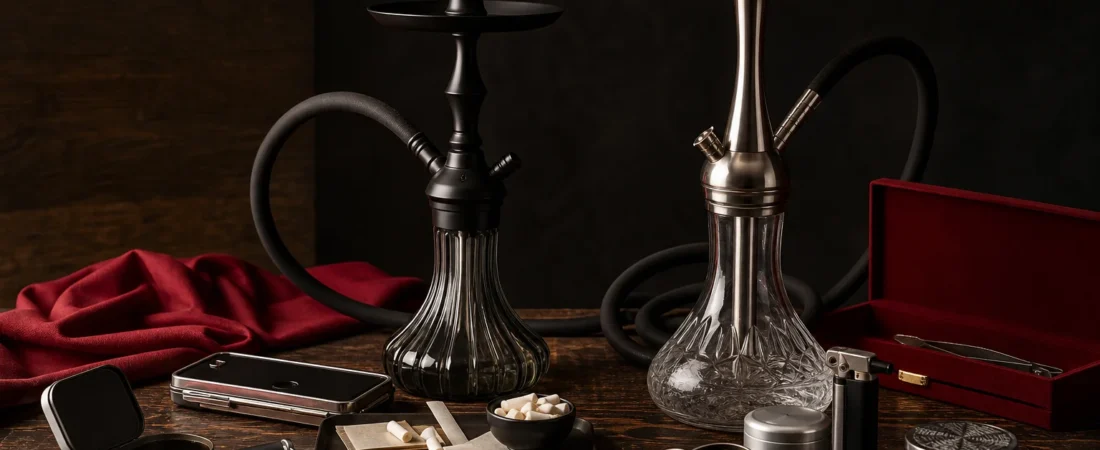
If you’ve heard the terms narghile and hookah and aren’t sure whether they refer to the same object or two different things, you’re not alone. The confusion is very common, particularly among those coming to this world for the first time. In this article we clarify the origin of each term, their differences — more cultural than technical — the parts that make up the device, and the accessories you’ll need to get started.
Please note: the sale of tobacco products and accessories is strictly reserved for adults aged 18 and over.
Narghile and hookah: are they the same object?
The short answer is yes: narghile and hookah refer, in essence, to the same type of water pipe used for smoking tobacco. The difference lies primarily in the geographical and cultural origin of the term, not in the object itself.
- Narghile (also written narguilé or narghile) comes from the Persian nārgil, meaning coconut, a reference to the plant-based vessel originally used as a water chamber. It is the predominant term in the Middle East, the Balkans and much of the Arab world.
- Hookah is the most widely used term in English-speaking countries, derived from Arabic. In Spanish-speaking countries the word cachimba is common, as are shisha and hookah, terms of Arabic and English origin respectively.
- Shisha refers in Arabic to the glass from which the water chamber is made, although in everyday Western usage it is used as a synonym for the complete device and even for the flavoured tobacco consumed in it.
In short: narghile, hookah, shisha and cachimba all describe the same device. Any design differences you may find between models — height, number of hoses, materials — reflect regional traditions or manufacturing choices, not fundamentally different pieces of equipment.
Main parts of a narghile or hookah
Knowing the parts of the device is essential for assembling it correctly, troubleshooting problems and choosing the right hookah accessories. Here is a top-to-bottom overview:
1. Bowl
The upper vessel where the tobacco is placed. It comes in several materials and shapes:
- Clay or terracotta: the traditional material, porous in nature, which absorbs some of the tobacco’s juices and can influence the experience.
- Glazed ceramic: less porous, easier to clean and available in a wider variety of shapes.
- Silicone: highly heat-resistant and virtually unbreakable; popular with users who prioritise durability.
- Glass: a very refined aesthetic, though more fragile.
The shape of the bowl — Egyptian, funnel, phunnel, vortex — determines how heat is distributed and how the tobacco’s juices flow, which directly affects performance.
2. Heat management device (HMD)
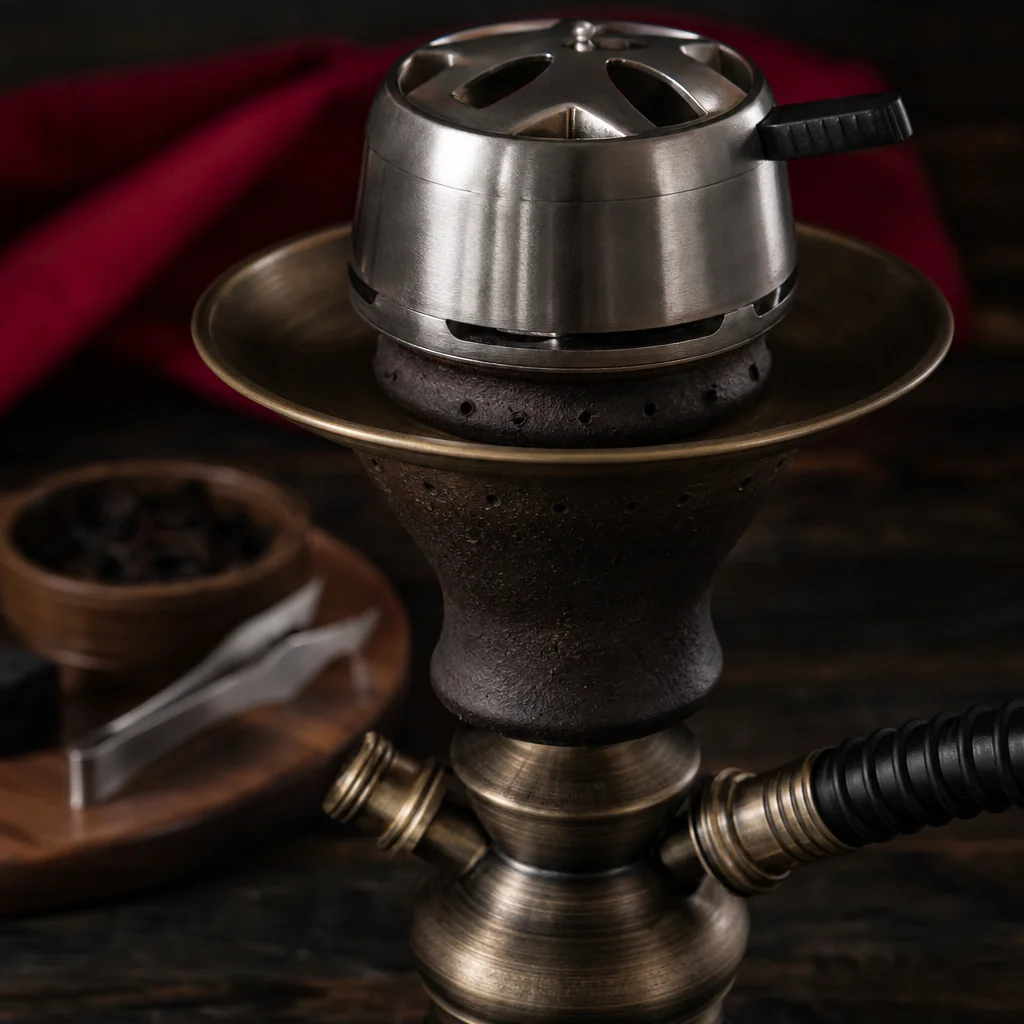
The Heat Management Device (HMD) is an accessory placed on top of the bowl as a replacement for traditional aluminium foil. It regulates the temperature of the charcoal and allows you to adjust the heat more precisely and conveniently. Brands such as Oduman offer models that are highly regarded for their build quality and design.
3. Stem (shaft)
The metal tube — typically made of stainless steel, aluminium or brass — that connects the bowl to the water base. Its length and internal diameter influence draw resistance. Higher-quality stems usually incorporate purge valves and adapters for multiple hoses.
4. Water base (vase)
The lower vessel, usually made of blown glass, holds the water through which the smoke passes before reaching the hose. The water level — generally one to three centimetres above the stem’s inlet — affects the density of the draw. Some models feature acrylic or silicone bases for greater durability.
5. Hose
Carries the smoke from the base to the mouthpiece. The most common materials are:
- Silicone: washable, flavour-neutral and very long-lasting; the most recommended option for everyday use.
- Traditional leather and fabric: a classic aesthetic, but generally not washable and prone to retaining flavours.
- Plastic or rubber: budget-friendly, though it can impart unwanted flavours over time.
Modern hookahs typically include one or two hose outlets; models designed for social use can have up to four.
6. Mouthpiece
The end of the hose through which you inhale. It can be made of plastic, wood, metal or resin. Many users opt for single-use disposable mouthpieces when sharing the device, for hygiene purposes.
Tobacco for narghile: hookah tobacco
The tobacco specifically designed for narghile — known as hookah tobacco, shisha tobacco or maassel — is a blend of cut tobacco, molasses or honey and flavourings. It is placed in the bowl and heated with charcoal, without a direct flame. One of the world’s leading brands in this segment is Al Fakher, renowned for its extensive range of flavours and consistent quality.
Essential accessories for assembly and maintenance
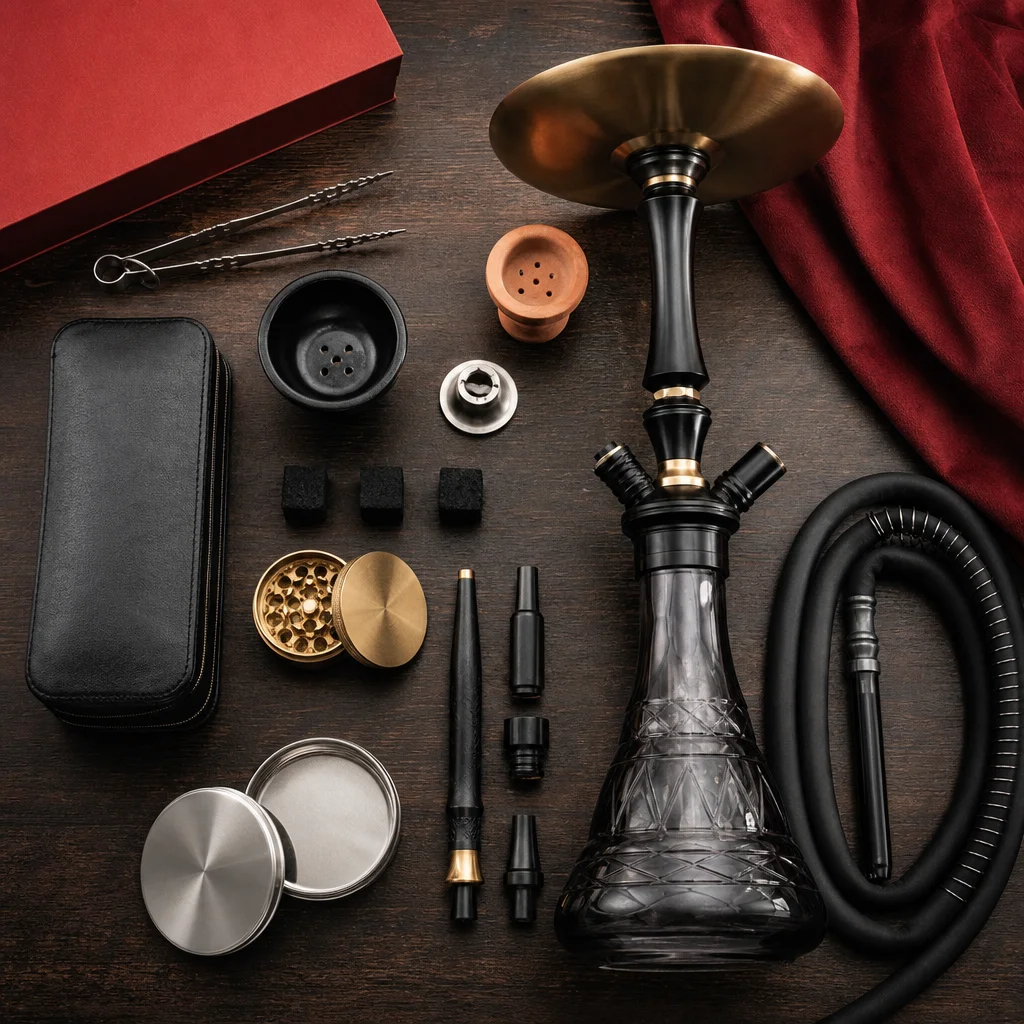
In addition to the structural parts, there are a number of accessories that make both assembly and maintenance of the device much easier:
- Hookah charcoal: available as quick-light (lit with a lighter or flame) and natural coconut charcoal (requires an electric burner, but is more stable and longer-lasting). Natural charcoal is preferred by more experienced users.
- Charcoal burner: an electric coil hotplate for lighting natural charcoal evenly.
- Aluminium foil: an alternative to the HMD; it is pierced with a poker to allow heat to pass through to the tobacco.
- Charcoal tongs: essential for handling hot charcoal safely.
- Cleaning brushes: flexible rods with bristles for cleaning the inside of the stem and hose.
- Grommets and adapters: rubber or silicone pieces that ensure an airtight seal between the various parts of the device. A poor seal causes air leaks that ruin the draw.
- Charcoal trays: placed around the stem to catch ash and prevent it from falling onto the base.
You can find everything you need in the hookah accessories section at Tu Otro Estanco.
Narghile versus other smoking devices: context
The narghile or hookah is a device with a long cultural tradition, very different in design and use from other devices such as conventional tobacco pipes or bongs and water pipes. Whereas a tobacco pipe uses a compact, direct combustion chamber with no water filtration, the narghile is characterised by its large size, filtration through the water base and the use of charcoal as an indirect heat source.
Basic tips for your first assembly
- Fill the water base until the stem is submerged by one to three centimetres.
- Check that all the grommets are properly seated; test the draw by covering the bowl with the palm of your hand.
- Place the tobacco in the bowl without packing it too tightly: it should sit loosely so that heat can circulate freely.
- Cover with perforated aluminium foil or your HMD and place the lit charcoal on top.
- Take the first few draws gently to warm the tobacco gradually.
With practice you’ll fine-tune the amount of tobacco, the number of coals and the water level until you find the setup that suits your preferences best.
Everything you just read, one click away
Frequently asked questions
Are narghile and hookah exactly the same thing?
Yes. Narghile, hookah, shisha and cachimba are different terms for the same type of water pipe used for smoking tobacco. The differences are in the geographical and cultural origin of the name, not in the object itself.
What type of bowl is best for a beginner?
For beginners, glazed ceramic or silicone bowls are a good choice: they are easy to clean, durable and deliver consistent performance without requiring any special maintenance.
What is the difference between quick-light charcoal and natural charcoal?
Quick-light charcoal ignites with a direct flame in seconds, making it convenient for occasional use. Natural coconut charcoal requires an electric burner, but it is more stable, lasts longer and does not affect the flavour of the tobacco.
How often should I clean my narghile?
It is advisable to clean the water base and rinse the hose (if it is silicone) after each session. The stem should be cleaned regularly with a dedicated brush to prevent residue build-up that can affect flavour and draw.
What is an HMD and do I need one to get started?
An HMD (Heat Management Device) is an accessory that replaces aluminium foil and allows you to regulate the heat of the charcoal over the bowl more precisely. It is not essential for beginners — aluminium foil works perfectly well — but it is a highly valued upgrade for regular users.