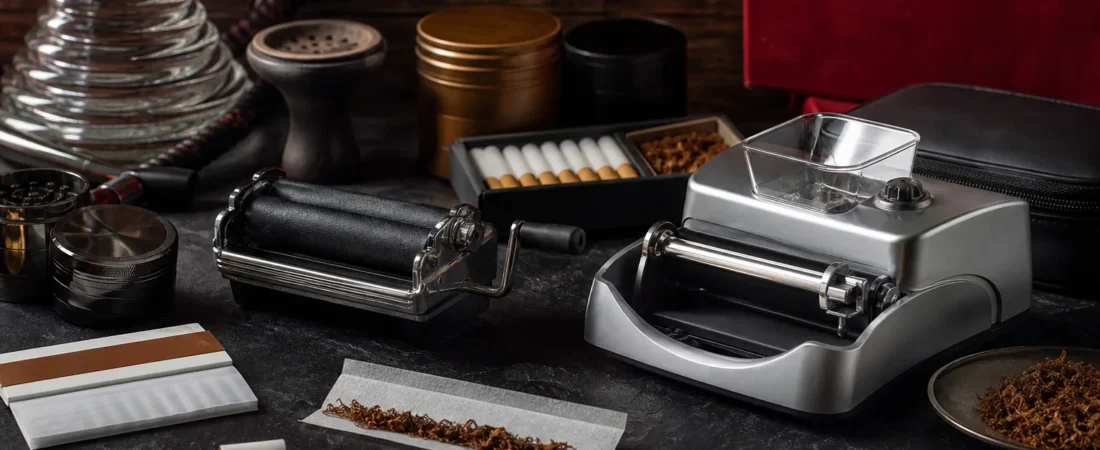
If you’re looking for a tobacco rolling machine, the first thing you’ll notice is that the market splits into two main families: manual roller machines and injector machines, which can be either manual or electric. Each type suits a different style of use, and understanding the differences will help you make the right decision. In this article we look at how each one works, what results it delivers and who it’s designed for.
Note: the sale of tobacco products is strictly reserved for adults aged 18 and over.
Types of Rolling Machine: an Initial Overview
Before diving into the comparison, it’s worth getting clear on the conceptual difference between the two main systems:
- Manual roller machines: use a fabric belt or band that, as it turns, wraps the tobacco together with rolling paper to form a cigarette.
- Injector machines (manual or electric): instead of rolling the tobacco in paper, they push it under pressure into a pre-made cigarette tube that already has a filter built in.
You can browse the full range in the rolling and injector machines section to get a feel for the complete catalogue before deciding.
Manual Roller Machines: How They Work and Available Formats
The roller machine is the most traditional system. Its mechanism is straightforward: tobacco is placed between the rollers along with rolling paper, the lid is closed and the rollers are turned until the tobacco is compacted and rolled. The result is a hand-rolled cigarette ready to smoke.
There are two main formats, depending on the size of cigarette they produce:
70 mm Rolling Machines
This is the most compact and most widely used format. It produces a standard-size cigarette, similar to a conventional factory cigarette. These machines are lightweight, easy to carry and very intuitive for anyone new to rolling. If this format interests you, you can view the range of 70 mm rolling machines available.
78 mm Rolling Machines
These produce a slightly longer cigarette, which allows for more tobacco or a longer rolling filter without reducing the tobacco column. They are favoured by those who prefer a more generous cigarette or who already have experience with hand rolling. Browse the options in the 78 mm rolling machines section.
Advantages and Disadvantages of the Manual Roller
- Advantages: low purchase price, fully portable, no need for electricity or batteries, easy to clean and very long-lasting if well looked after.
- Disadvantages: requires some practice to achieve a consistent roll, the process is slower when rolling several cigarettes in a row, and the quality of the result depends partly on the user’s technique.
Injector Machines: the Tube System
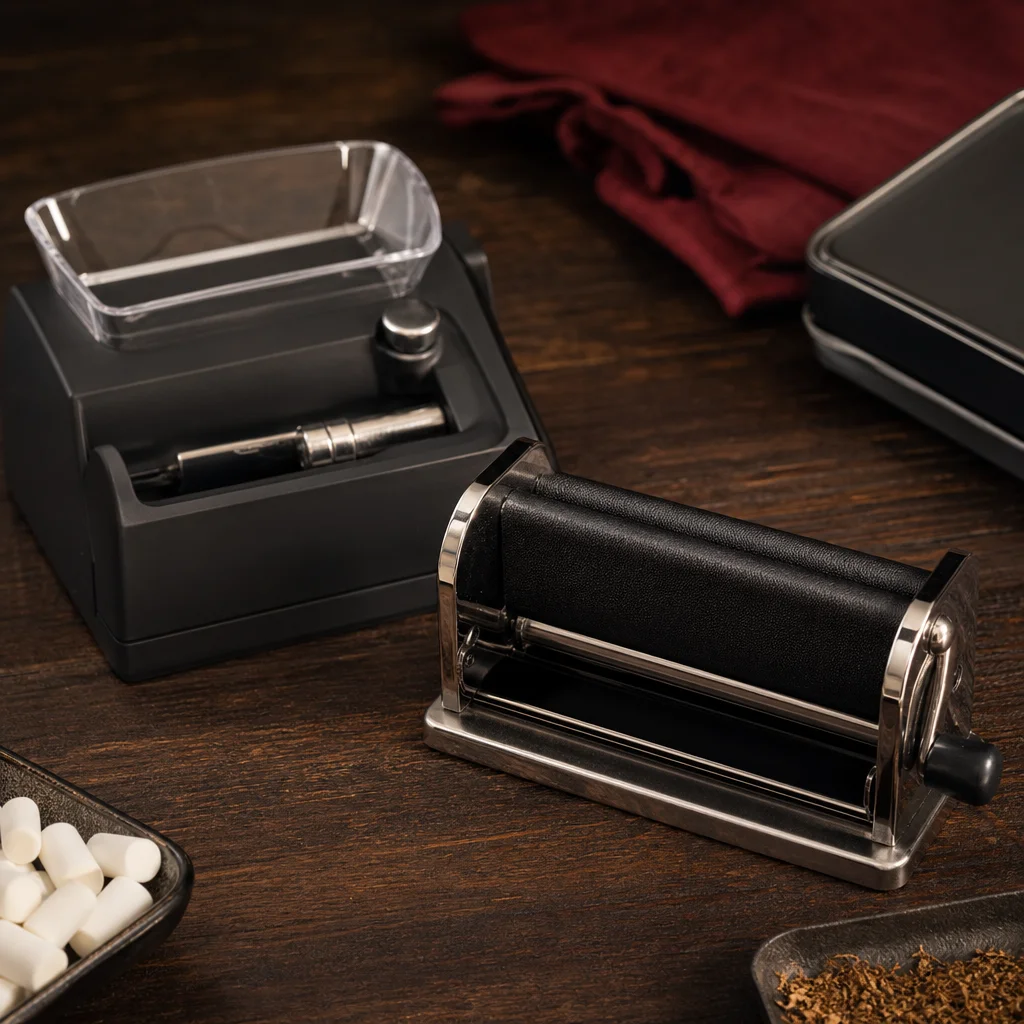
Injectors work in a fundamentally different way: rather than rolling tobacco in paper, they compact it and push it into a pre-made cigarette tube that already has an integrated filter. The result looks visually identical to a factory cigarette.
To use this system you will need cigarette tubes, which are purchased separately and are available in various lengths and with different types of filter.
Manual Injectors
These operate via a lever or plunger that the user works by hand. They are faster than a roller for producing a consistent cigarette, since the tube guarantees the outer shape from the outset. Their purchase price is moderate and they do not require electricity.
Electric Injectors
These fully automate the process: simply place the tobacco in the hopper, insert the tube and press a button. The machine handles the dosing and compacting of the tobacco evenly. They are the fastest option and produce cigarettes with a very consistent appearance. Their main drawback is the higher purchase price and the need for a power source. You can view all available models in the tube injector machines category.
Advantages and Disadvantages of Injectors
- Advantages: very consistent results from the very first use, an exterior appearance identical to a factory cigarette, faster production (especially with electric models), no need to master rolling technique.
- Disadvantages: ongoing cost of tubes, electric models require electricity or batteries and are less portable, and maintenance (cleaning the injector needle) is somewhat more involved.
Head-to-Head Comparison: Manual Roller vs Injector
| Criterion | Manual Roller | Manual Injector | Electric Injector |
|---|---|---|---|
| Speed | Medium | Medium–High | High |
| Consistency of result | Depends on practice | High | Very High |
| Portability | Very High | High | Low |
| Purchase cost | Low | Medium | High |
| Ongoing running cost | Paper and tobacco only | Tubes + tobacco | Tubes + tobacco |
| Maintenance | Very simple | Simple | Moderate |
| Learning curve | Requires practice | Minimal | Almost none |
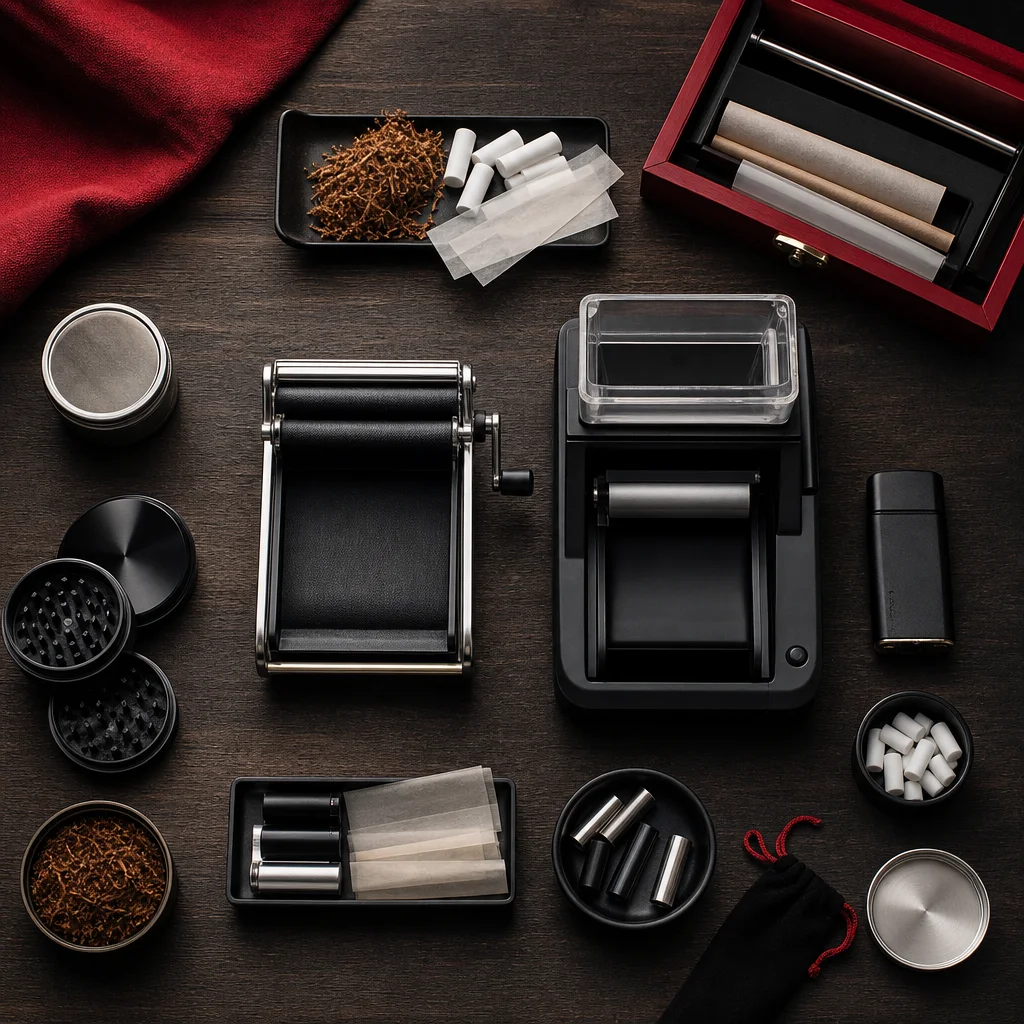
Which Is Right for You? A Guide by User Profile
Choose a manual roller machine if…
- You value portability and want to roll on the go, wherever you are.
- You prefer to keep the initial purchase cost as low as possible.
- You enjoy the hands-on process and don’t mind spending a few seconds on each cigarette.
- You roll a moderate number per day and have no need for batch production.
Choose a manual injector if…
- You want a consistent result without relying on personal technique.
- You prefer the finish of a cigarette with a tube and integrated filter.
- You’re looking for a balance between purchase price and ease of use.
Choose an electric injector if…
- You roll in high volumes and speed is your top priority.
- You want the most consistent result possible with minimal effort.
- You don’t mind the higher upfront cost or using the machine in a fixed location.
Maintenance and Service Life
Both roller machines and injectors require periodic cleaning to maintain their performance. For a roller, it’s simply a matter of removing tobacco residue from the belt with a soft brush. With injectors, the needle or plunger must be cleaned regularly to prevent blockages, particularly if tobacco with a higher moisture content is used. Regular cleaning noticeably extends the service life of either type of device.
Conclusion
There is no universally superior tobacco rolling machine: the right choice depends on how you intend to use it, your budget and how much you value convenience over portability. Roller machines in 70 mm and 78 mm formats are a classic, affordable and versatile option; injectors, especially electric ones, offer speed and consistency in exchange for a higher initial outlay and the ongoing cost of tubes. Assess your routine and choose accordingly.
Everything you just read, one click away
Frequently asked questions
What is the difference between a 70 mm and a 78 mm rolling machine?
The main difference is the length of the cigarette they produce. A 70 mm machine produces a compact, standard-size cigarette, whereas a 78 mm machine produces a slightly longer one, allowing for more tobacco or a longer filter without reducing the tobacco column.
Do I need tubes to use an injector machine?
Yes. Injector machines, whether manual or electric, require pre-made cigarette tubes with an integrated filter. The tobacco is pushed into the tube via a plunger or needle, so tubes are an essential consumable for this system.
Is it difficult to learn how to use a manual roller machine?
It takes a little practice to achieve a consistent, well-compacted roll, but the learning curve is short. Most people get satisfactory results within just a few attempts.
Which is more economical in the long run: a roller machine or an injector?
A roller machine has lower ongoing costs, as it only requires rolling papers and tobacco. Injectors add the cost of tubes as a continuous consumable, although the cost per tube is generally quite low.
Can I use filters with a manual roller machine?
Yes. Roller machines, particularly 78 mm models, allow you to incorporate rolling filters at one end of the cigarette before rolling. It is common practice to place the filter alongside the tobacco in the roller so that it becomes integrated into the finished cigarette.