
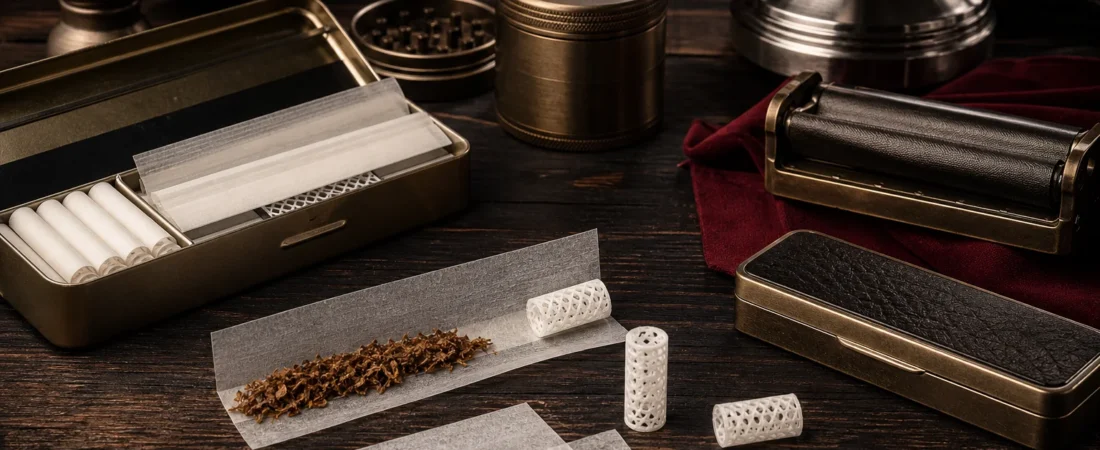
In the world of rolling tobacco there is a wide variety of filters, each with a different design, material, and behaviour. Among them, Jilter filters occupy a distinctive place: their construction differs markedly from classic acetate filters, active carbon filters, and cardboard filters alike. If you have ever wondered what makes a Jilter different, this article explains it in detail.
Please note: the sale of tobacco products is reserved exclusively for adults aged 18 and over.
What is a Jilter filter?
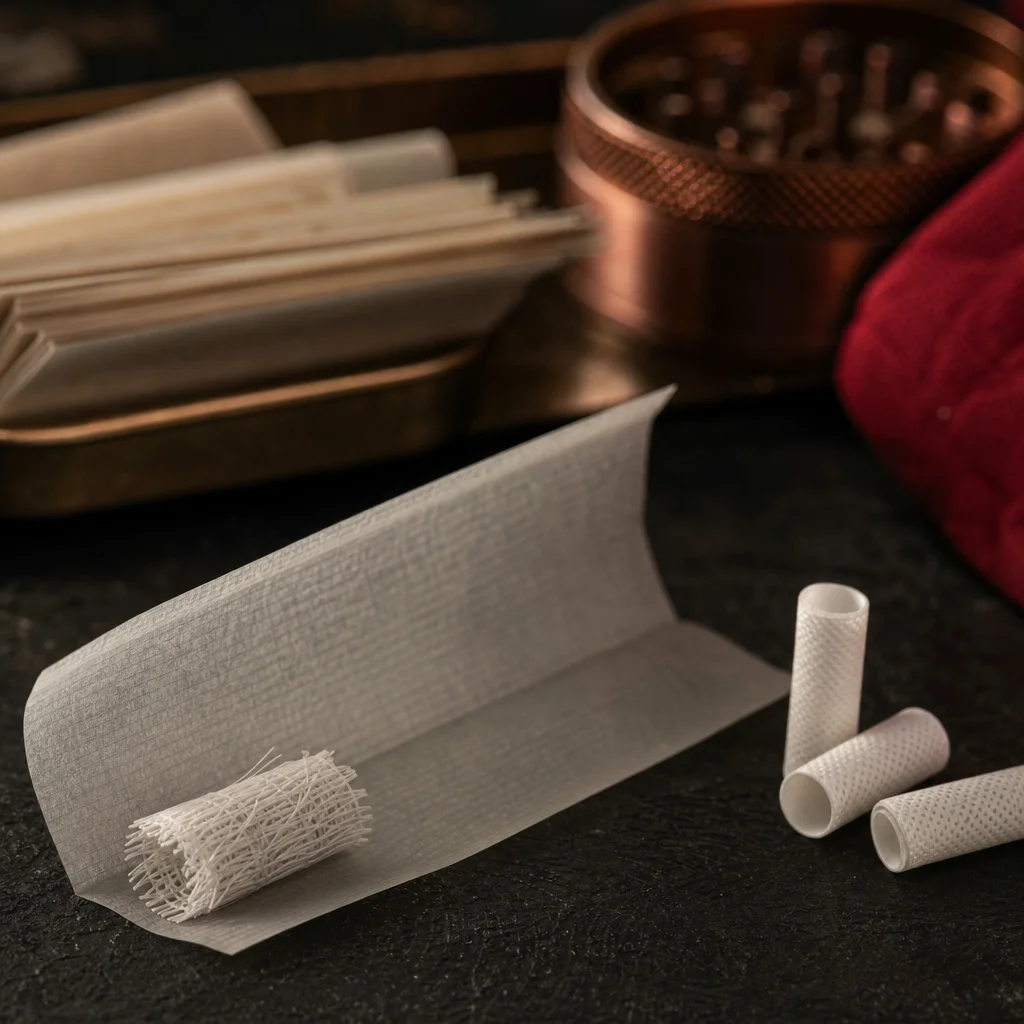
A Jilter filter is a filter for roll-your-own cigarettes made from an interwoven fibre mesh — generally polyester or similar materials — arranged in a three-dimensional lattice. Unlike a conventional acetate filter, which is essentially a compact block of pressed fibres, the Jilter has an open structure with numerous air channels running through it.
Its format is distinctive: it comes as a small, flexible disc or sheet that the smoker rolls or folds and inserts directly inside the rolling paper, becoming integrated into the cigarette itself before it is sealed. It is not an external filter added to the end of an already-rolled cigarette, but rather an element that forms part of the cigarette’s construction from the outset.
How do you fit a Jilter filter?
The process is straightforward, though it does require a little practice at first:
- Fold or roll the Jilter disc over itself to form a compact cylinder. The flexibility of the material means you can do this without the mesh tearing.
- Place it at the end of the rolling paper where the mouthpiece will be, just as you would with a cardboard tip or an acetate slim filter.
- Distribute the tobacco along the paper and roll the cigarette as normal. The mesh sits snugly inside the paper with no need for glue or any additional element.
- When smoking, air passes through the multiple channels of the mesh, providing a smooth draw.
One of the features most frequently noted by users is precisely that the open mesh structure does not appreciably restrict airflow — something that can occur with very dense acetate filters or with certain active carbon filters, whose granular composition creates greater resistance to smoke passage.
Comparison: Jilter versus other filter types
To better understand where the Jilter sits in the market, it is worth comparing it with the most common formats available in our full range of filters.
| Feature | Jilter | Acetate (slim/regular) | Active carbon | Cardboard |
|---|---|---|---|---|
| Main material | Fibre mesh (lattice) | Pressed cellulose acetate fibres | Active carbon granules | Rolled or folded card |
| Structure | Open / three-dimensional | Compact / dense | Granules in a capsule | Rigid / laminar |
| Airflow | High (low resistance) | Medium–low | Low–medium | High (very open) |
| Insertion method | Rolled inside the paper | Inserted at the end | Inserted at the end | Rolled/inserted at the end |
| Typical format | Disc / sheet | Pre-formed cylinder | Pre-formed cylinder | Strip or square |
Jilter vs. conventional acetate filters
Smoking filters and other acetate filters are the most widely used on the market. They are made from cellulose acetate fibres compressed into a uniform cylinder. It is their density that creates the characteristic resistance when drawing. The Jilter, with its open mesh structure and air channels, offers a noticeably freer draw — closer to that of an unfiltered cigarette, yet with the physical presence of an element at the mouthpiece end.

Jilter vs. active carbon filters
Actitube carbon filters contain active carbon granules inside, which gives them a particle-retention capacity quite unlike that of any fibre-based filter. They are denser and create greater resistance to airflow. The Jilter does not share this operating principle: its mesh does not work by adsorption but rather through the geometry of the mesh channels themselves. They are, therefore, products with entirely different design philosophies.
Jilter vs. cardboard filters
Cardboard filters are the most basic format: a strip of card rolled or folded to act primarily as a mouthpiece tip, giving shape to the end of the cigarette with very little particle retention. The Jilter shares their logic of being integrated inside the paper, but its fibre mesh does interact physically with the smoke in a way that plain card does not.
What type of smoker are Jilter filters designed for?
Jilter filters are aimed at roll-your-own smokers who are looking for a filter with the following characteristics:
- A smooth draw: the open mesh structure minimises resistance when inhaling.
- Natural integration: by rolling inside the paper, the aesthetic and tactile result is very similar to that of a factory-made cigarette.
- An alternative to dense acetate filters: for those who find conventional acetate filters too restrictive in terms of draw.
- Curiosity about new formats: the experienced smoker who already knows economy acetate filters or organic filters and wants to try a different filtration technology.
Conclusion
Jilter filters represent a distinct approach within the roll-your-own filter market: their three-dimensional fibre mesh, their method of insertion inside the paper, and their low airflow resistance set them clearly apart from acetate, active carbon, and cardboard filters. They are not better or worse in absolute terms, but rather different in design and in user experience. Understanding these differences allows each smoker to choose the format that best suits their rolling style and draw preferences.
Everything you just read, one click away
Frequently asked questions
What is a Jilter filter?
A Jilter filter is a filter for roll-your-own cigarettes made from an interwoven fibre mesh arranged in a three-dimensional lattice. It comes as a flexible disc or sheet that the smoker rolls and inserts inside the rolling paper before sealing the cigarette.
How do you fit a Jilter filter in rolling paper?
You fold or roll the Jilter disc into a small cylinder, place it at the mouthpiece end of the rolling paper, and roll the cigarette as normal. The mesh sits integrated inside the paper with no need for any additional elements.
How does a Jilter filter differ from a conventional acetate filter?
An acetate filter is made from fibres compressed into a dense cylinder, which creates greater resistance to airflow. The Jilter has an open structure with multiple channels, providing a freer and smoother draw.
Do Jilter filters and active carbon filters work in the same way?
No. Active carbon filters retain particles through adsorption, thanks to the carbon granules inside them. The Jilter works solely through the geometry of its fibre mesh, with no chemical adsorption, and creates less resistance to airflow.
Who are Jilter filters recommended for?
They are designed for roll-your-own smokers who prefer a smooth, low-resistance draw, who want the filter to integrate naturally inside the paper, or who wish to explore a filtration format different from acetate or active carbon.