

The cigarette case is one of the most classic and practical accessories a smoker can own. Beyond its aesthetic appeal, it serves a very specific purpose: protecting cigarettes or roll-ups during transit, preventing them from bending, getting damp, or falling apart in your pocket. In this guide we run through the main types, materials and criteria worth considering before making your choice.
Please note: the sale of tobacco products is strictly reserved for adults aged 18 and over.
What is a cigarette case and what is it for?
A cigarette case is a rigid or semi-rigid holder designed to store and carry cigarettes, roll-ups or tubes in an orderly and protected manner. Unlike a cardboard packet, it offers mechanical resistance against knocks and pressure, and in many models also provides a degree of protection against moisture.
There are cigarette cases designed for factory-made cigarettes, for roll-ups of varying thicknesses, and for filling tubes. Knowing which format you use most regularly is the first step towards making the right choice.
Types of cigarette case by cigarette format
Cases for factory-made cigarettes
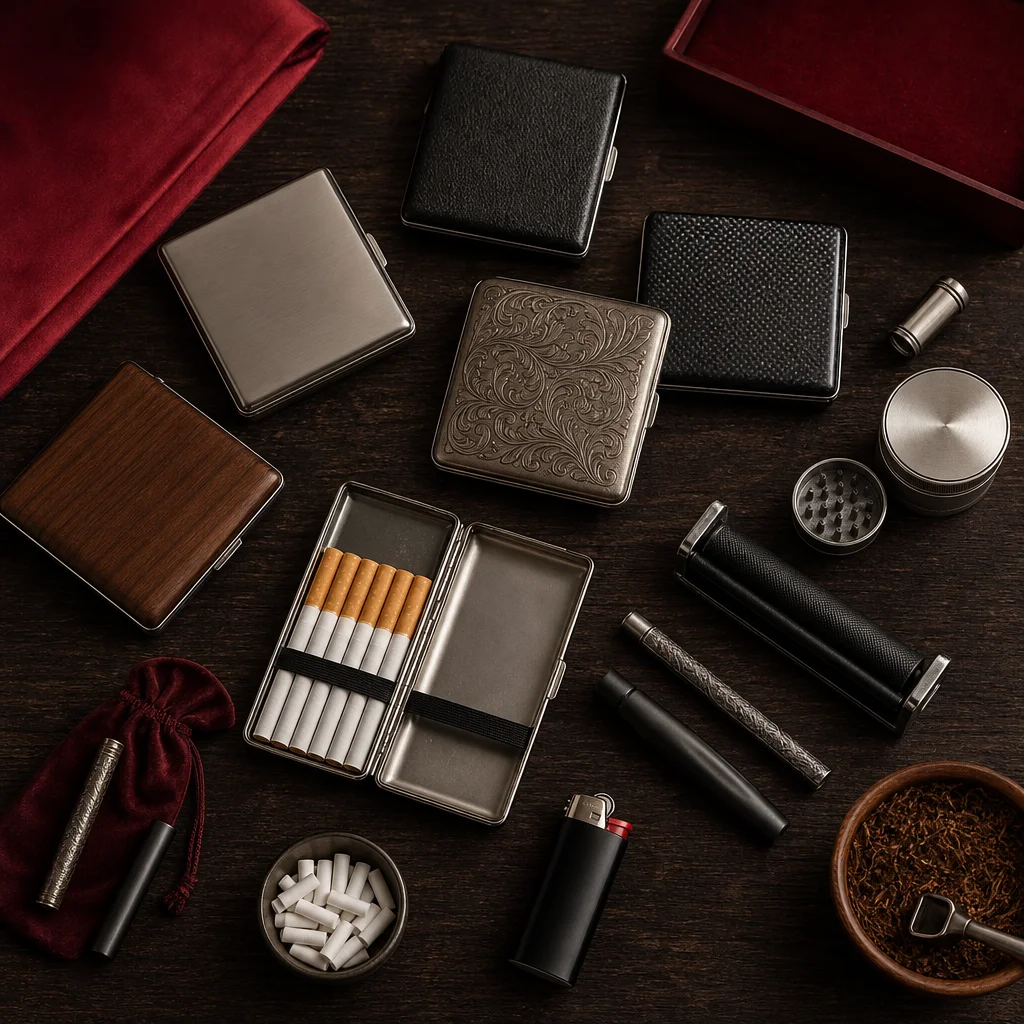
These are the most standardised models. They typically hold between 8 and 20 cigarettes, with an interior divided into two compartments or fitted with an elastic band that keeps the cigarettes upright. The classic shape is rectangular and flat, designed to fit in a shirt pocket or the front pocket of a pair of trousers.
Cases for roll-ups
Hand-rolled cigarettes tend to have a slightly irregular diameter and are sometimes a little shorter or longer than a standard cigarette. For this purpose, it is worth choosing models with a flexible interior or more room inside, so they do not compress the roll-up and keep it in good condition. If you roll frequently, you may also want to browse the range of rolling papers available to find the weight and format that best suits your technique.
Cases for filling tubes
Filling tubes have a more uniform diameter and length than hand-rolled cigarettes, so they fit well in standard cigarette cases. If you regularly use filling tubes together with a rolling or filling machine, a mid-capacity case (10–14 units) is generally sufficient for day-to-day use.

Materials: objective advantages and differences
| Material | Durability | Weight | Aesthetic | Recommended use |
|---|---|---|---|---|
| Metal (steel, aluminium) | High | Medium–high | Classic / collectible | Heavy daily use, collecting |
| Leather or faux leather | Medium | Low | Elegant / vintage | Daily use, gifting |
| Silicone | Medium–high (flexible) | Very low | Casual / modern | Casual use, irregular roll-ups |
| Rigid plastic | Medium | Very low | Functional | Budget-friendly, practical use |
Metal: the most classic material
Metal cigarette cases — typically made from stainless steel or aluminium — are the most closely associated with the traditional image of the accessory. Their rigid structure offers the greatest mechanical protection against knocks and crushing. They are the preferred choice of collectors and those looking for a long-lasting item with fine finishes (engraving, polishing, chrome plating). The main drawback is the weight, which is noticeably greater than that of other materials.
Leather and faux leather: style and lightness
Cigarette cases with a natural or synthetic leather exterior combine a pleasant feel with a reduced weight. The interior is usually rigid to maintain the shape. They are a highly regarded option as a gift or for those who prefer a warmer, less industrial finish. With use, natural leather develops a characteristic patina that many owners come to appreciate.
Silicone: flexibility for roll-ups
Silicone cigarette cases are particularly useful for carrying hand-rolled cigarettes, as their flexibility accommodates irregular shapes without causing damage. They are lightweight, easy to clean and resistant to moisture. Their aesthetic is more casual, making them popular among younger smokers or for outdoor use.
Rigid plastic: the most functional option
Rigid plastic models prioritise practicality and low cost. They are very lightweight and, in general, perfectly adequate for everyday use without any great aesthetic demands. Some feature airtight closures that offer additional protection against moisture.
Capacity: how many cigarettes do you need to carry?
The capacity of a cigarette case typically ranges from 8 to 20 cigarettes. To make the right choice, it helps to think about your actual usage:
- Moderate daily use: models holding 8–12 units — more compact and easier to carry in a pocket.
- Heavy use or long days out: models holding 14–20 units — slightly bulkier, but you won’t need to refill during the day.
- Collecting or gifting: in this case, capacity takes a back seat to finish and materials.
Cigarette cases vs. tobacco pouches: which do you need?
It is easy to confuse a cigarette case with a tobacco pouch. The distinction is straightforward: a cigarette case holds already-rolled or factory-made cigarettes ready to smoke, whereas a tobacco pouch is designed to carry loose rolling tobacco along with papers and, in many cases, filters. If you roll on the spot, a tobacco pouch is your accessory; if you carry your roll-ups ready-made, a cigarette case is the right choice. Many smokers use both, depending on the situation.
Tips for choosing the right cigarette case
- Define your format: factory-made cigarettes, hand-rolled cigarettes or filling tubes. Each has different dimensions.
- Think about where you’ll use it: trouser pocket, handbag, rucksack… Size and rigidity matter depending on where you plan to carry it.
- Consider the closure: press-stud closures are quick; magnetic ones are quieter; metal clip closures are more secure against accidental opening.
- Match the material to your use: metal for maximum protection and durability, leather for style and lightness, silicone for irregular roll-ups.
- Collecting vs. daily use: if you are looking for a piece to collect or give as a gift, prioritise finish and detail; if it is for everyday use, prioritise ergonomics and durability.
With these criteria in mind, choosing from the range of cigarette cases available becomes much more straightforward. Whether you are after a functional everyday accessory or a piece with genuine aesthetic value, there is an option to suit every type of smoker.
Everything you just read, one click away
Frequently asked questions
What is the difference between a cigarette case and a tobacco pouch?
A cigarette case is designed to hold already-rolled or factory-made cigarettes that are ready to smoke. A tobacco pouch, on the other hand, is used to carry loose rolling tobacco along with papers and filters. They are complementary accessories with distinct functions.
What is the best material for an everyday cigarette case?
It depends on how you use it. Metal (steel or aluminium) offers the greatest mechanical resistance. Leather combines lightness with style. Silicone is ideal for hand-rolled cigarettes thanks to its flexibility. For heavy daily use, metal or rigid leather tend to be the most durable options.
How many cigarettes does a standard cigarette case hold?
Most standard models hold between 8 and 20 cigarettes. More compact models (8–12 units) are easier to carry in a pocket, while larger-capacity ones (14–20) are more practical for long days out.
Can cigarette cases be used for hand-rolled cigarettes?
Yes, although it is worth choosing models with a flexible interior or more room inside, as hand-rolled cigarettes can have a slightly irregular diameter. Silicone cigarette cases are particularly well suited to this purpose.
Can I use a standard cigarette case for filling tubes?
Generally yes, because filling tubes have fairly uniform dimensions similar to those of a factory-made cigarette. A mid-capacity cigarette case works well for carrying tubes that have already been filled using a filling machine.