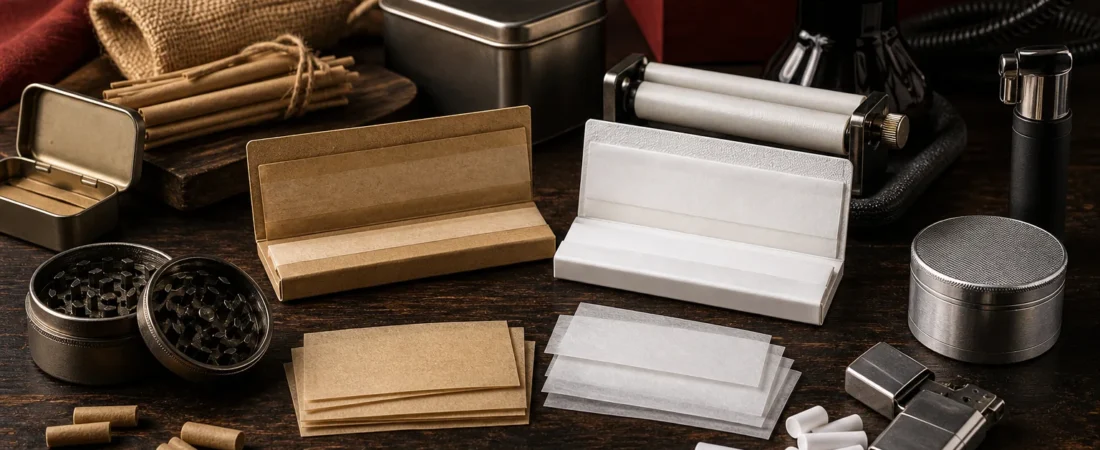
When choosing rolling papers, one of the first decisions you face is the type of paper: organic (unbleached) or bleached. Although at first glance the difference may seem purely aesthetic — brown versus white — there are genuine technical differences in manufacturing, materials and behaviour that are worth understanding. This guide explores them objectively so you can make an informed choice.
Please note: the sale of tobacco and accessories is strictly reserved for adults aged 18 and over.
What is bleached rolling paper?
Bleached rolling paper is paper that has undergone an industrial process to achieve a uniform white colour. Historically, this process used chlorine or chlorine-based compounds (such as chlorine dioxide), although the modern industry has largely shifted towards chlorine-free bleaching methods, known as ECF (Elemental Chlorine Free) or even TCF (Totally Chlorine Free).
The most common raw material in bleached papers is wood or cotton cellulose, treated to remove lignin and other natural compounds that give the fibre its natural brown colour. The result is a clean, uniform paper with a very consistent texture.
Brands such as Smoking rolling papers are a classic reference in this category, offering a wide range of formats in bleached cellulose and rice paper.
What is organic or unbleached rolling paper?
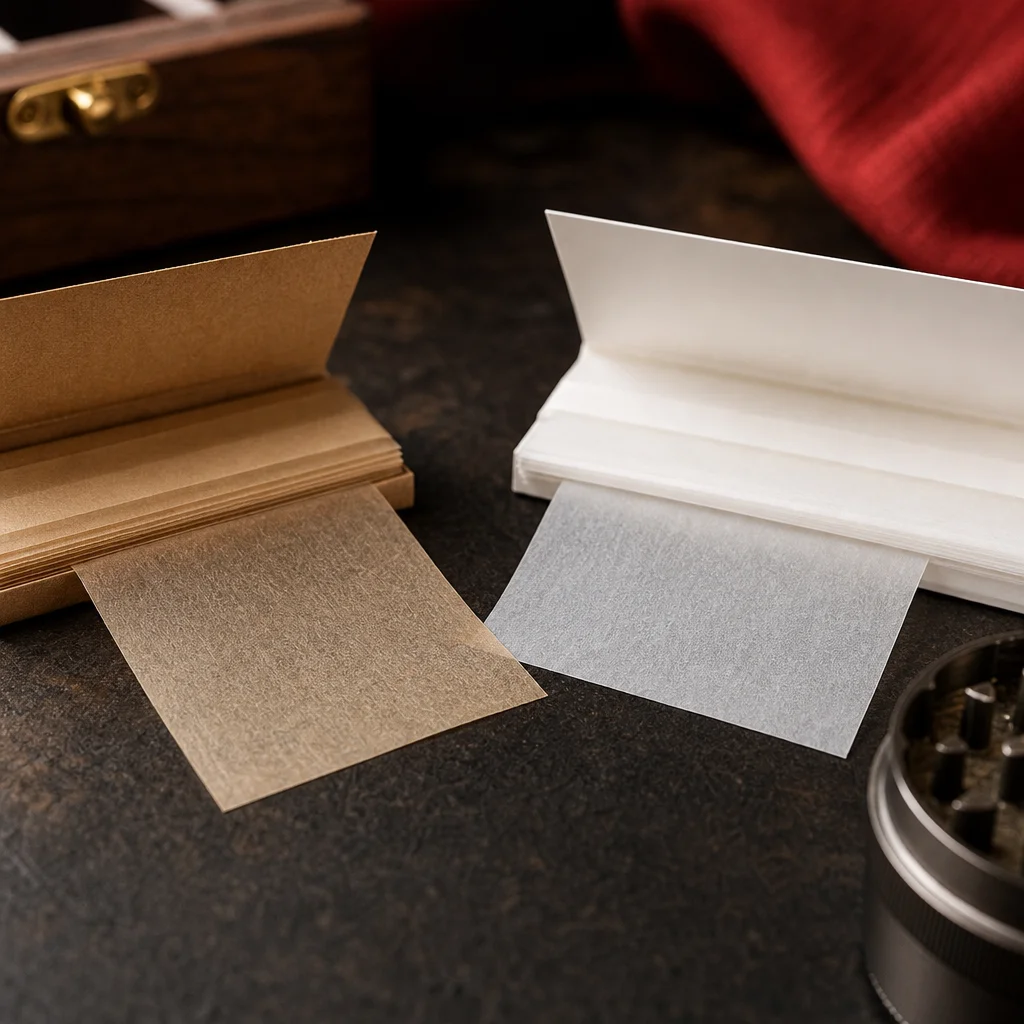
The term organic paper in the context of rolling papers generally refers to papers that have not been subjected to chemical bleaching processes. Their characteristic colour — ranging from beige to light brown — is the natural result of untreated or minimally processed plant fibres.
The most common raw materials in this category are:
- Hemp: a plant fibre with a long tradition in paper manufacturing. It produces sturdy sheets with a slightly rougher texture that makes them easier to grip.
- Rice: yields very thin, slow-burning papers, though in their unbleached form they retain a darker tone than conventional bleached rice paper.
- Unbleached cellulose: similar to that used in bleached paper, but without the chemical treatment step to alter the colour.
Brands such as Raw rolling papers or Greengo rolling papers are representative examples of this philosophy: unbleached papers made from natural-origin materials and manufactured without chemical bleaching additives.
Technical comparison: organic vs bleached
| Characteristic | Bleached paper | Organic / unbleached paper |
|---|---|---|
| Colour | White | Beige / light brown |
| Manufacturing process | Chemical bleaching (ECF, TCF or chlorine) | No bleaching or minimally processed |
| Common materials | Wood cellulose, cotton, rice | Hemp, unbleached rice, natural cellulose |
| Thickness | Variable (thin to standard) | Variable (thin to standard) |
| Burn | Regular and even | Generally slow and even |
| Bleaching additives | Yes (depending on process) | No |
| Flavour contribution | Neutral to very slightly perceptible | Very neutral or with a faint vegetal note |
Differences in burn behaviour
One of the most debated aspects among users is how the paper behaves when burning. In general terms:
- Bleached rice papers are known for their slow, discreet burn, producing very little visible ash.
- Unbleached hemp papers tend to burn evenly and steadily, with a slightly darker ash than rice paper.
- Standard bleached cellulose papers offer a faster, more predictable burn, which is highly valued by users who prioritise consistency.
Brands such as OCB organic rolling papers combine the best of both worlds: unbleached hemp paper with natural Arabic gum, delivering a slow burn and an easy-to-work texture. Meanwhile, Elements rolling papers use rice as their primary material, resulting in a particularly clean burn with virtually no ash.

Differences in flavour
Rolling paper, by virtue of its thinness, contributes very little flavour on its own. However, more experienced users do notice subtle nuances:
- Papers bleached using modern processes (ECF/TCF) are practically neutral on the palate.
- Unbleached hemp papers may contribute a very subtle vegetal note, barely perceptible to most users.
- Rice papers, whether bleached or unbleached, are the most neutral in terms of flavour contribution.
In any case, the paper’s influence on the final flavour is marginal compared with that of the tobacco or blend being used.
How to choose between the two?
The choice between organic and bleached paper depends primarily on personal preferences regarding texture, burn speed and the manufacturing philosophy of the product. Some useful pointers:
- If you want a paper with a very slow burn and fine texture, rice papers — bleached or otherwise — are generally the most highly regarded option.
- If you prefer a sturdy paper that is easy to roll, unbleached hemp offers excellent handling.
- If you value the absence of chemical bleaching processes, organic papers such as Raw, Greengo or OCB Organic are the most representative choices.
- If you are looking for consistency and a wide range of formats, traditional bleached paper brands offer very extensive catalogues.
You can browse all available options in our full rolling papers category, where you will find everything from classic bleached papers to the most specialised organic varieties.
Conclusion
The difference between organic and bleached rolling papers goes beyond colour: it involves distinct manufacturing processes, raw materials and burn characteristics. Understanding these nuances allows you to choose the paper that best suits your technical preferences. Whether you go for a classic bleached paper or an untreated organic one, the range available on the market is extensive and covers every type of need.
Everything you just read, one click away
Frequently asked questions
What is the difference between organic and bleached rolling papers?
The main difference lies in the manufacturing process: bleached paper undergoes a chemical treatment to achieve a uniform white colour, whereas organic or unbleached paper retains the natural colour of the plant fibres (beige or light brown) and does without those bleaching processes.
Is organic rolling paper always made from hemp?
Not necessarily. Although hemp is one of the raw materials most commonly associated with unbleached organic paper, organic papers made from rice or untreated cellulose also exist. The defining characteristic is the absence of chemical bleaching, not the material itself.
Which rolling paper burns the slowest?
In general, rice papers — both bleached and unbleached — are known for their particularly slow, clean burn. Hemp papers also offer an even, unhurried burn. Brands such as Elements (rice) and Raw (unbleached hemp) are benchmarks in this regard.
Does the colour of the paper affect the flavour of the tobacco?
The paper's influence on flavour is very slight. Rice papers are the most neutral. Unbleached hemp papers may contribute a very faint vegetal note, barely perceptible to most users. In any case, the paper's impact on the final flavour is marginal compared with that of the tobacco itself.
Which are the most well-known brands of organic and bleached rolling papers?
Among organic or unbleached papers, Raw, Greengo and OCB Organic stand out — all manufactured without chemical bleaching processes. In the bleached paper category, Smoking and Elements (the latter using bleached rice) are classic references with a long-standing presence in the market.