
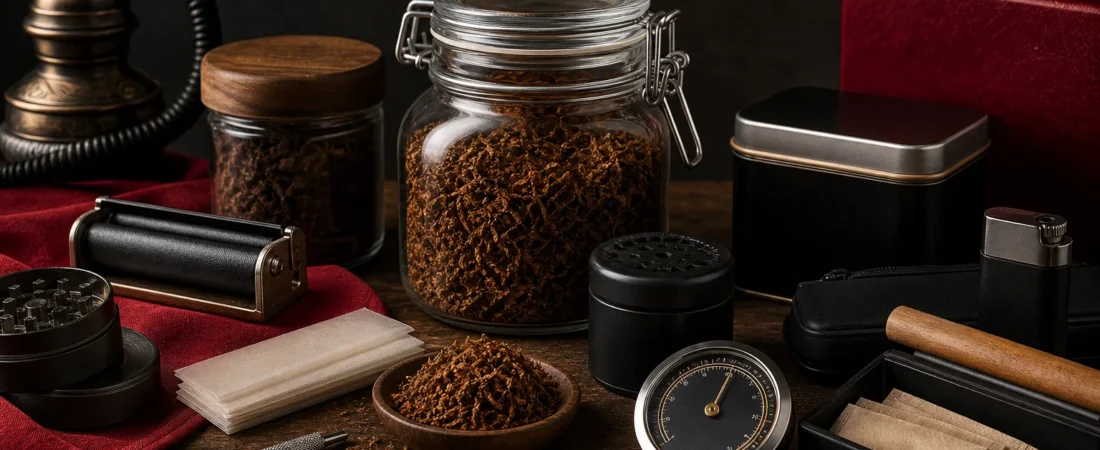
If you roll your own cigarettes, you’ll know that the texture and condition of the tobacco directly affect the experience. Tobacco that is too dry crumbles and is difficult to handle; tobacco that is too moist clumps together and doesn’t spread evenly in the paper. Keeping it in just the right condition requires knowing a few key factors and having the right accessories to hand. In this guide, we cover everything you need to know.
Please note: the sale of tobacco is strictly reserved for adults aged 18 and over.
The three factors that determine how well rolling tobacco keeps
1. Relative humidity
Humidity is the most critical factor. Rolling tobacco keeps best when the relative humidity of the storage environment sits at around 60–70%. Below that range, the leaf loses moisture rapidly, becomes brittle and breaks apart when handled. Above it, mould is more likely to develop and the tobacco takes on a sticky, doughy feel that makes rolling difficult.
Indoor humidity varies considerably throughout the year: in winter, with the heating on, indoor air can drop below 30%; in summer, in coastal areas, it can exceed 80%. This is precisely why the storage container matters so much — it acts as a barrier against those external fluctuations.
2. Temperature
Heat accelerates moisture evaporation and can degrade the tobacco’s aromas. Ideally, store it somewhere cool, away from direct heat sources such as radiators, ovens or prolonged exposure to sunlight. Moderate, stable temperatures with minimal fluctuation are the most favourable for long-term storage.
3. Direct light
Ultraviolet radiation breaks down the organic compounds in the leaf. Avoid leaving tobacco exposed to direct sunlight or under intense artificial lighting for extended periods. Opaque or dark-coloured containers offer additional protection against this factor.
Essential accessories for storing rolling tobacco
Airtight containers: the most practical solution
An airtight container is the first line of defence against moisture loss. Tight Vac airtight containers are one of the market’s leading options: they work via a partial vacuum system that expels air from the interior when the lid is closed, significantly reducing oxidation and moisture loss. They are available in various capacities, making them suitable for storing a small pouch for daily use as well as larger reserves.
When choosing an airtight container, bear the following in mind:
- Capacity: match it to the amount of tobacco you typically use, so you’re not leaving the container half-empty for weeks on end.
- Material: BPA-free plastic and glass are the most common options; glass doesn’t absorb odours and is easier to clean.
- Seal: check that the sealing mechanism is in good condition — a worn gasket will compromise the airtight seal entirely.
Tobacco humidifiers
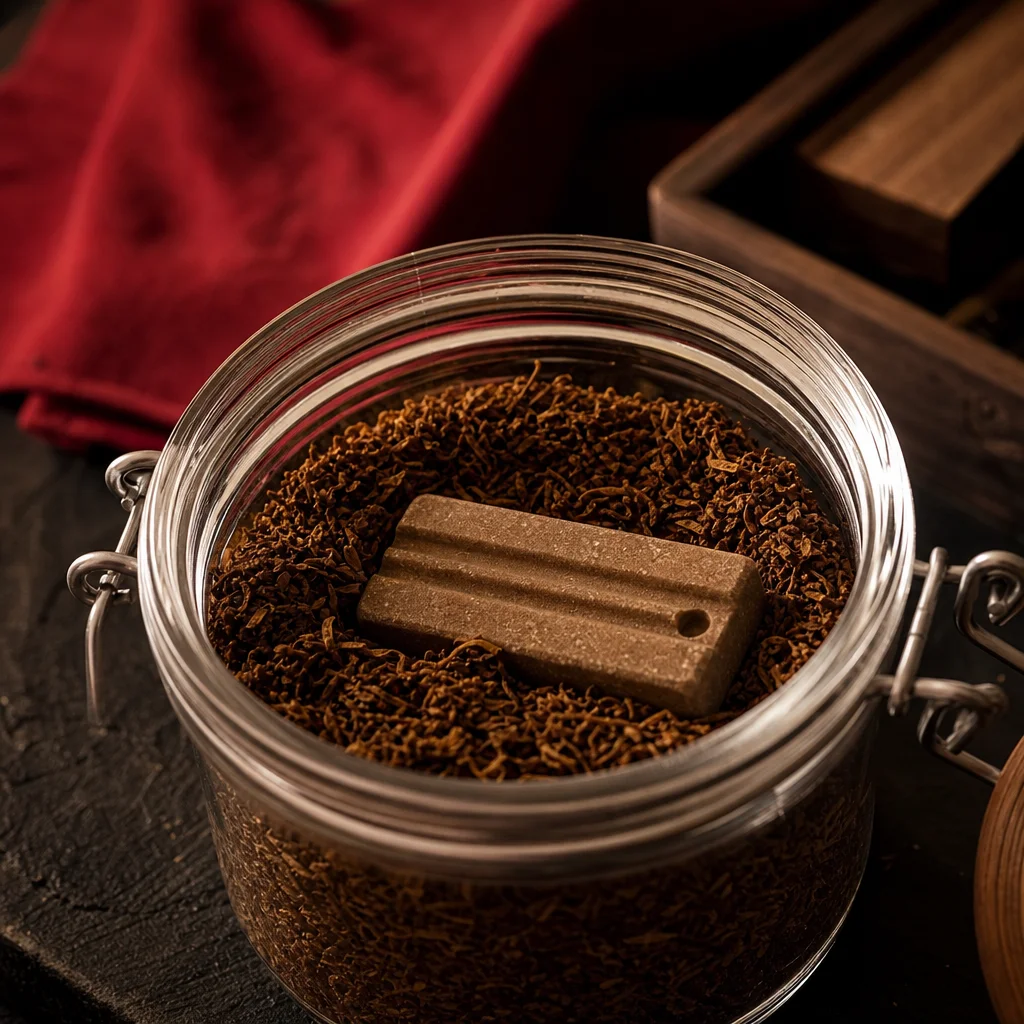
If you store larger quantities or want more precise humidity control, humidifiers designed specifically for tobacco are a worthwhile option. They work by releasing moisture gradually and in a controlled manner inside the container. Sponge, gel and ceramic models are all available; gel and ceramic types tend to be more stable and require less maintenance. They are placed inside the container or box alongside the tobacco and recharged periodically with distilled water or a dedicated solution.
For everyday use with small quantities, a well-sealed airtight container is perfectly sufficient. Humidifiers become more useful when storing tobacco over several weeks or months.
Tobacco pouches: for day-to-day use
Rolling tobacco pouches are not designed for long-term storage, but rather for carrying and daily use. They allow you to keep a reasonable amount of tobacco in your pocket or bag, protected from knocks, dust and incidental ambient moisture. Many also feature a compartment for rolling papers and another for rolling filters, making them a very practical all-in-one case to carry with you.
For storage at home, combine the tobacco pouch (for what you’ll use that day) with an airtight container (for the rest of the pouch).
Short- and long-term storage: a combined approach
Daily use (up to one week)
For tobacco you’ll use within a few days, a tobacco pouch with a firm closure or a small airtight container is perfectly adequate. Keep it somewhere cool and out of direct light. There’s no need to add a humidifier for such short periods, provided the tobacco already has the right moisture level when you buy it.
Medium-term storage (weeks)
If you buy several pouches at once or like to keep a reserve, use an airtight container with a vacuum system. You can add a small gel humidifier inside if you find the tobacco tends to dry out in your usual environment. Check the condition of the tobacco roughly once a week.
Long-term storage (months)
For storing tobacco over several months, the combination of an airtight container + humidifier + a cool, dark location is the most recommended approach. Some users prefer to split the quantity across several smaller containers to avoid opening the same one repeatedly, as each opening introduces air and alters the internal humidity.
Common mistakes to avoid
- Leaving tobacco in the original open pouch: tobacco pouches are not designed for a prolonged seal once opened — transfer the contents to an airtight container as soon as possible.
- Using the fridge without adequate protection: the fridge may seem like a good option due to its stable temperature, but the internal humidity is variable and food odours can permeate the tobacco. If you do use it, make sure the container is perfectly sealed.
- Adding too much moisture: placing a piece of fruit or a soaking wet sponge inside can push humidity above the optimum level and encourage mould. Regulated humidifiers are preferable to uncontrolled DIY methods.
- Not cleaning the container between refills: residue from old tobacco can transfer its smell to fresh tobacco. Clean and thoroughly dry the container before adding a new batch.
- Grinding too much tobacco at once: if you use a grinder to prepare your tobacco, only grind what you need at that moment — already-ground tobacco loses moisture faster due to the greater surface area exposed to air.

Summary: the key points for proper storage
Keeping rolling tobacco in good condition doesn’t require a significant outlay or specialist knowledge. With a quality airtight container, a cool and dark storage spot, and a humidifier as a supplement when needed, you can ensure your tobacco retains its texture and aroma for weeks or even months. The key is to control humidity, avoid heat and light, and not leave the tobacco exposed to air for any longer than necessary.
Everything you just read, one click away
Frequently asked questions
What is the ideal humidity for storing rolling tobacco?
The optimum relative humidity is around 60–70%. Below that, the tobacco dries out and becomes brittle; above it, it can clump together or develop mould.
Will any airtight container do for storing tobacco?
Any container with a sound airtight seal will help preserve tobacco, but purpose-made models such as Tight Vac containers — which create a partial vacuum when closed — offer a superior seal and do a better job of reducing oxidation and moisture loss.
Can I store rolling tobacco in the fridge?
It's possible, but only if the container is perfectly sealed, as the fridge has variable humidity and food odours that can permeate the tobacco. For everyday use, an airtight container kept somewhere cool and dark is generally sufficient.
What's the point of a tobacco pouch if it doesn't preserve tobacco long-term?
Tobacco pouches are designed for carrying and daily use: they protect tobacco from knocks, dust and incidental ambient moisture throughout the day. Many include compartments for papers and filters, making them very practical to carry with you.
Why shouldn't I grind a large amount of tobacco at once with a grinder?
Grinding tobacco increases its surface area in contact with air, which speeds up moisture loss. It's best to grind only the amount you need at that moment, so the rest stays in better condition.