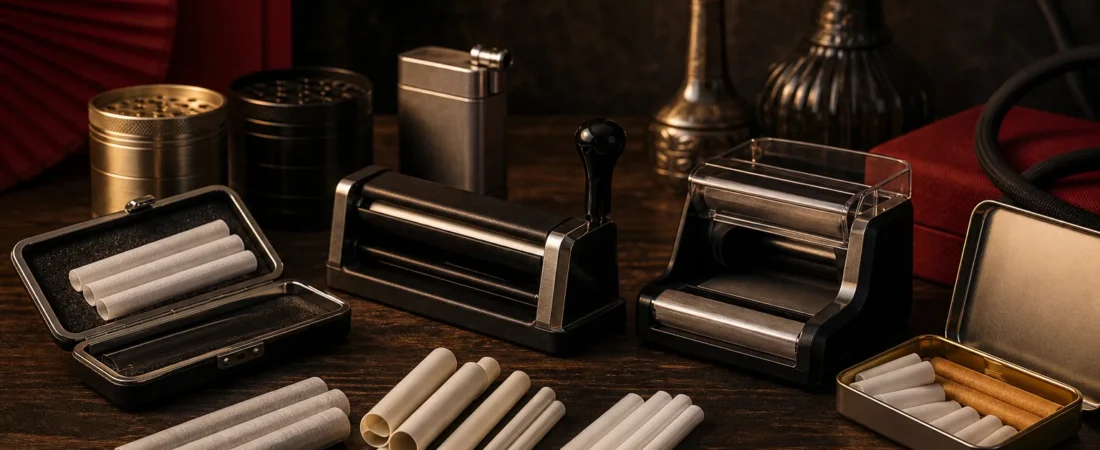
If you’re thinking about making your own cigarettes at home, one of the first steps is understanding what type of machine you need and which tubes are compatible with it. The market offers several options that, at first glance, may seem similar but work in very different ways. This guide objectively explains the key differences so you can make an informed decision.
Please note: tobacco products are sold exclusively to adults aged 18 and over.
Rolling machine vs. tube filling machine: what’s the difference?
These two terms are often used interchangeably, but technically they are not the same thing. Understanding the difference will help you know exactly what you’re looking for.
Rolling machines
Rolling machines are designed to roll tobacco in cigarette paper. The user places the tobacco in the machine’s chamber, closes the mechanism, and, using a roller action, forms the cigarette inside a paper. The result is a paper-rolled cigarette, similar to a hand-rolled one but with a more uniform shape.
Within this category there is a very popular variant: 78 mm rolling machines, whose format corresponds to the most widely used standard size and is compatible with the majority of papers of that length available on the market.
Tube filling machines (injectors)
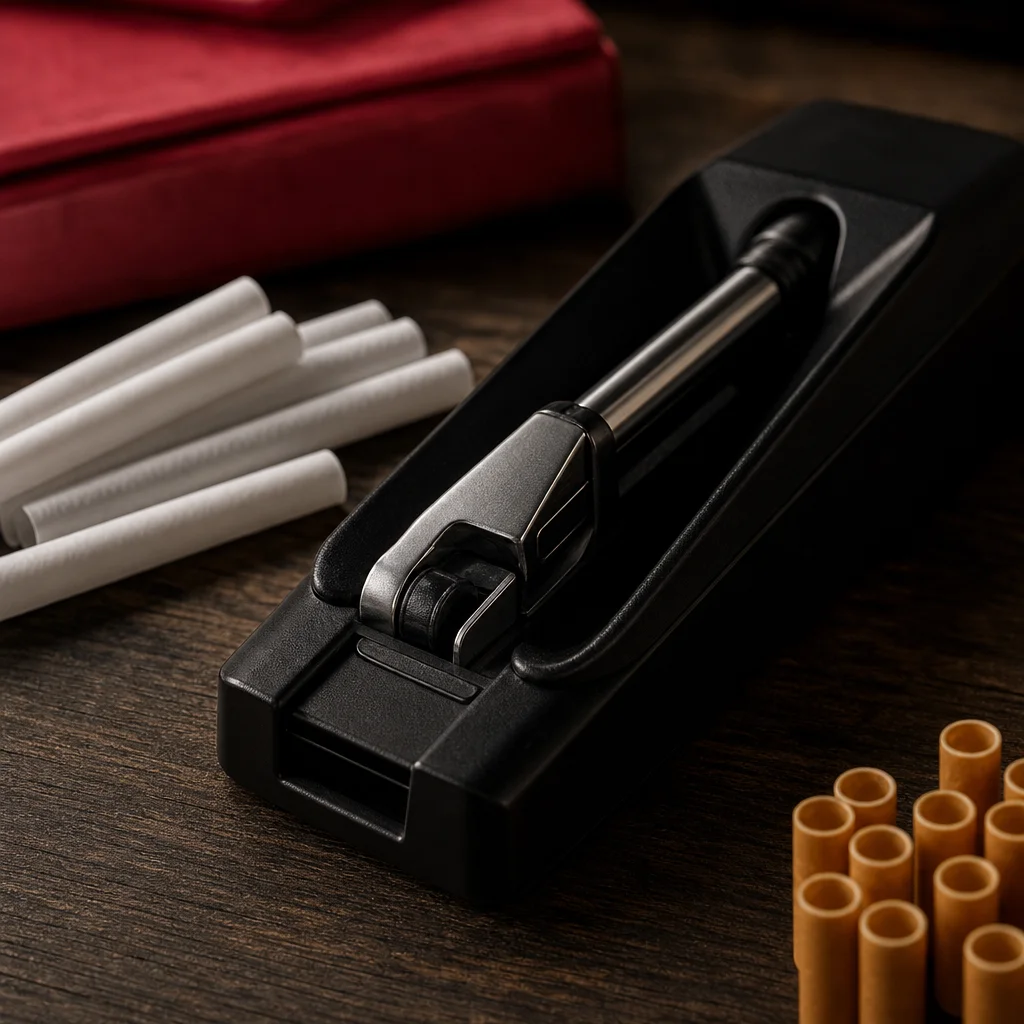
Injector or tube filling machines work in an entirely different way: rather than rolling tobacco in paper, they push tobacco under pressure into a pre-made cigarette tube that already includes its own filter. The result is visually identical to a conventional factory-made cigarette.
If you’re looking for this type of device, you can browse the catalogue of injector machines to see the available models. They are particularly popular with those who want a neater finish and an experience closer to a manufactured cigarette.
Types of tube filling machine by mechanism
Within injector machines, there are important differences depending on the operating mechanism:
- Manual lever machines: These are the most basic and affordable. The user operates a lever that pushes the tobacco into the tube. They are compact, require no electricity, and are well suited to occasional or low-volume home use.
- Screw or plunger manual machines: These use a screw or plunger system to compress and push the tobacco. They provide a more even fill and tend to be somewhat more robust than simple lever machines.
- Electric machines: These automate the injection process. They are ideal for those who regularly prepare a high volume of cigarettes, as they reduce manual effort and deliver greater consistency in the fill.
You can browse the full range of rolling and tube filling machines available to compare models across different categories in one place.
Tubes: the other key element
The machine is only half of the equation. Tubes are essential, and your choice of tube directly influences the final result. A cigarette tube is a paper sleeve with a built-in filter, ready to be filled with tobacco using an injector machine.
Factors to consider when choosing tubes
- Length: The most common tubes are standard size (equivalent to a conventional cigarette), although longer formats also exist. It is essential that the tube length is compatible with the nozzle of your injector machine.
- Filter type: Tubes can come with classic acetate filters or activated charcoal filters, among others. Each type offers a different draw resistance, which affects the overall experience.
- Paper brand and quality: The density and quality of the tube’s paper affect how it behaves during injection and how it burns afterwards.
- Quantity per box: Tubes are typically sold in boxes of 100, 200, or more. Choosing the right format depends on how frequently you use them.
In our cigarette tubes section you will find a wide selection of brands and formats to choose the ones that best suit your machine and your preferences.
Quick comparison: rolling machine vs. injector machine
| Feature | Rolling machine | Injector / tube filling machine |
|---|---|---|
| Result | Cigarette in rolling paper | Cigarette with tube and filter |
| Consumable required | Cigarette paper | Tube with built-in filter |
| Visual finish | Hand-crafted appearance | Appearance similar to a factory-made cigarette |
| Ease of use | Very straightforward | Straightforward (manual) or automatic (electric) |
| Recommended volume | Occasional or moderate use | From occasional use to high volume |
| Maintenance | Minimal | Periodic cleaning of the nozzle |
How to choose based on your usage volume
How frequently you intend to use the machine is probably the most decisive factor when making your choice:
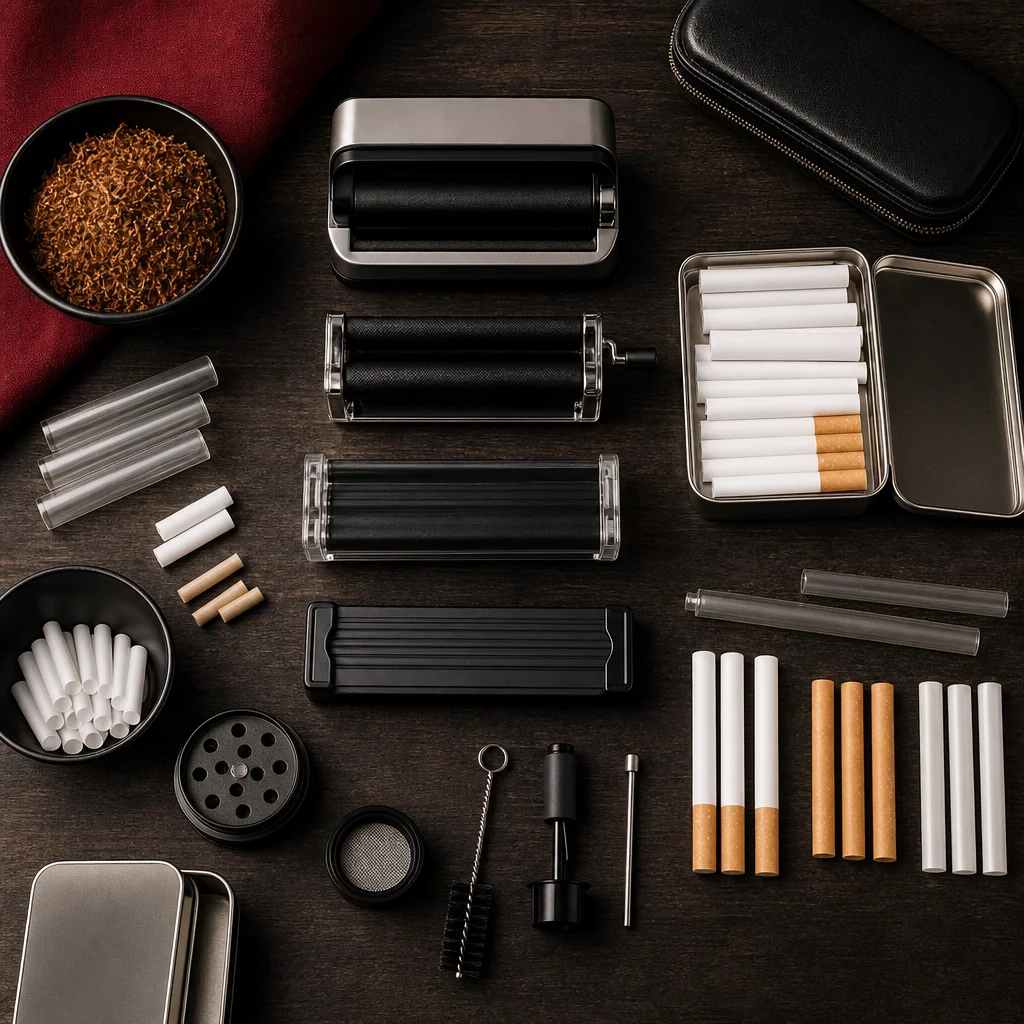
- Occasional or infrequent use: A manual lever or roller machine is more than adequate. They are compact, easy to store, and require no special maintenance.
- Moderate daily use: A more robust manual injector with a screw or plunger mechanism will offer greater durability and a more consistent fill without the need for electricity.
- Intensive or high-volume use: An electric machine is the most practical option. It automates the process, reduces physical effort, and ensures uniformity with every cigarette.
Practical tips for better results
- Prepare your tobacco properly: Tobacco that is too moist can jam the mechanism, whilst tobacco that is excessively dry may crumble and make injection difficult. The consistency of the tobacco directly affects the result.
- Don’t overfill the chamber: Loading too much tobacco at once can strain the mechanism and shorten the machine’s lifespan.
- Clean the nozzle regularly: Tobacco residue that builds up in the injection nozzle can affect performance. A periodic clean with a dry brush is sufficient in most cases.
- Check compatibility: Before buying tubes, make sure their diameter and length are compatible with your machine’s nozzle.
Conclusion
Choosing between a rolling machine and a tube filling machine depends primarily on the finish you’re after and how much use you’ll be putting it to. Injector machines deliver a more uniform result and are compatible with a wide variety of filtered tubes, whilst rolling machines are a simpler, more straightforward option for those who prefer cigarette paper. In either case, the right combination of machine and tubes makes a noticeable difference to the final result.
Everything you just read, one click away
Frequently asked questions
What is the difference between a rolling machine and a tube filling machine?
A rolling machine wraps tobacco in cigarette paper, whereas a tube filling machine (or injector) pushes tobacco under pressure into a pre-made filtered tube. The visual result and the overall experience differ between the two.
Are all tubes compatible with any injector machine?
Not necessarily. It is important to check that the diameter and length of the tube are compatible with the nozzle of the injector machine you intend to use. Most machines on the market work with the standard format, but it is worth verifying this before purchasing.
What type of tube filling machine is best for intensive daily use?
For high-volume daily use, electric injector machines are the most suitable, as they automate the process, reduce manual effort, and deliver greater consistency in the fill. For more moderate use, a robust manual injector may be perfectly sufficient.
What types of tubes are available for injector machines?
Tubes vary mainly in length, filter type (classic acetate, activated charcoal, and others), and paper quality. They are also sold in different box sizes, from 100 to several hundred units.
How do you keep an injector machine in good working order?
Basic maintenance involves periodically cleaning the injection nozzle to remove any accumulated tobacco residue. A dry brush is usually sufficient. It is also important not to overfill the tobacco chamber, to avoid putting unnecessary strain on the mechanism.